





What Are Car Seat Slide Rails? The Hidden Mechanism Behind Every Comfortable and Safe Drive
Every time a driver slides forward to reach the pedals or a passenger pushes a seat back for extra legroom, a small but critical mechanism is doing the work behind the scenes. That mechanism is the seat slide rail, and although it rarely gets a second thought, it plays a direct role in comfort, posture, and occupant safety. This article explains, in plain language, what car seat slide rails are, how they function, and why they matter far more than most drivers realize.
Key Takeaways
Car seat slide rails are the metal track systems that let a seat move forward and backward so drivers and passengers of different sizes can reach a safe, comfortable position.
These sliders are not just a comfort feature; they are a structural safety component that must hold the seat firmly in place during sudden braking or a collision.
Quality rails combine smooth horizontal travel with a positive locking mechanism so the seat never shifts unexpectedly while driving.
Worn, bent, or poorly manufactured sliders are a common cause of squeaking, sticking seats, and, in worse cases, seat movement during impact.
Selecting the right sliders depends on load capacity, travel distance, mounting space, and the locking system required for the application.
What Are Car Seat Slide Rails?
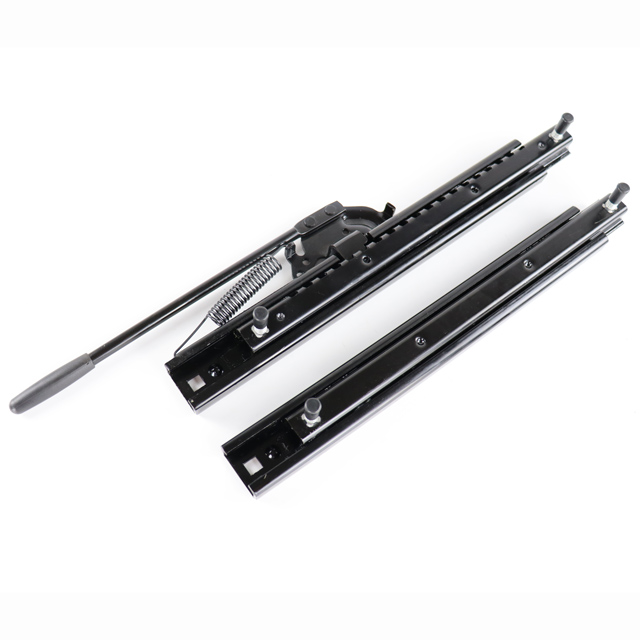
Car seat slide rails, often called car seat sliders or seat runners, are the paired metal tracks installed between the floor of a vehicle and the base of a seat. One rail is fixed to the vehicle floor and the other is attached to the underside of the seat, allowing the seat to glide along a horizontal path. This simple linear motion is what lets a six-foot driver and a five-foot passenger share the same seat at different times, each finding a position where their feet, hands, and eyes line up correctly with the pedals, wheel, and dashboard.
At its core, the mechanism is made up of an upper rail, a lower rail, a rolling element (ball bearings or rollers) that reduces friction between them, and a locking system that holds the seat firmly once the desired position is reached. A release handle or lever, usually located at the front of the seat cushion, disengages the lock so the seat can be repositioned, then re-engages it automatically once released.
Where Seat Sliders Are Used
While the term is most associated with passenger cars and trucks, the same fore-and-aft adjustment principle appears across many seating applications, including commercial vans, buses, RVs and motorhomes, off-highway and engineering machinery cabs, and even office and gaming chairs. The load requirements and locking strength differ by application, but the underlying purpose of the slide rail remains the same: deliver a safe range of adjustment without sacrificing stability.
How Does the Slide Rail Mechanism Work?
Understanding the mechanics helps explain why quality matters so much. When a person pulls the release handle, spring-loaded locking pins lift out of a row of notches or holes along the rail, freeing the seat to move. As the seat is pushed or pulled to a new spot, ball bearings or rollers sandwiched between the inner and outer rail channel keep the motion smooth and largely friction-free. Releasing the handle allows the pins to drop back into the nearest set of notches, locking the seat at that exact position.
The precision of this process depends heavily on manufacturing tolerances. If the rail channels are not perfectly parallel, or the locking pins are undersized, the seat may rock, rattle, or fail to lock securely. This is why reputable production of these components relies on roll-forming processes that keep the rail geometry consistent across thousands of units, along with tight quality control on the locking pin and spring assembly.
Why Are Car Seat Slide Rails Important?
It is easy to take a smoothly sliding seat for granted, but the importance of this mechanism extends well beyond convenience. Three areas stand out: safety, ergonomics, and long-term reliability.
1. Structural Safety in a Crash
A seat that shifts unexpectedly during hard braking or a collision can throw off occupant positioning relative to the seatbelt and airbag, reducing the effectiveness of those restraint systems. Regulators in the United States address this directly: Federal Motor Vehicle Safety Standard No. 207, "Seating Systems," sets minimum strength requirements for seats, their attachment assemblies, and their adjusters so that seats stay attached and in position when forces act on them during a vehicle impact. The seat slide rail is part of that attachment assembly, which is exactly why its locking strength and rail material are engineered to defined load specifications rather than left to guesswork.
2. Driving Posture and Ergonomics
Reaching the pedals, steering wheel, and mirrors comfortably is not just about feeling relaxed; it directly affects reaction time and fatigue on long drives. Vehicle ergonomics research recommends adjusting the seat's fore-and-aft position first, before fine-tuning the backrest, lumbar support, and steering wheel, because the slide rail position determines the entire driving posture that follows, as outlined in this vehicle ergonomics best practice guide. Without a properly functioning slider, drivers may be forced to stretch toward the pedals or sit too close to the wheel, both of which increase fatigue and reduce control during emergency maneuvers.
3. Comfort Across Different Body Sizes
Households, fleets, and rental vehicles are typically used by people of very different heights and builds. A reliable slider mechanism makes it possible for each driver to find an individually correct position in seconds, rather than the vehicle being comfortable for only one body type.
4. Long-Term Durability and Resale Value
A slider that is rough, sticky, or rattling is one of the most noticeable wear signs in an aging vehicle interior, and it is often one of the first things a prospective buyer or inspector tests. Durable hardware preserves the perceived quality of a seat for years, which matters for OEM brand reputation and for the resale value of the vehicle itself.
Types of Seat Slider Designs
Not all seat slide rails are built the same way. The right configuration depends on the load the seat will carry, the available installation height, and the level of safety redundancy required. The table below summarizes the most common categories.
| Type | Locking Method | Typical Use Case | Key Advantage |
|---|---|---|---|
| Single-locking slider | Lock engages on one rail side | Passenger cars, office and gaming chairs, light commercial seating | Cost-effective, smooth single-handed operation |
| Double-locking (dual-lock) slider | Independent locking teeth engage on both rails simultaneously | Driver seats, heavy-duty trucks, engineering machinery | Higher resistance to impact and vibration |
| Low-profile slider | Single or double lock, reduced overall height | RVs, motorhomes, EVs, vehicles with limited under-seat clearance | Frees up space for batteries or electronics beneath the seat |
| Side-mount slider | Single or double lock, lateral mounting bracket | Applications with restricted floor mounting points | Flexible installation in tight bays |
Common Problems With Worn or Poor-Quality Seat Slide Rails
Because the slider is used every time someone enters the vehicle, wear and tear accumulate steadily. The most frequently reported issues include:
The seat won't lock in position – usually caused by debris jammed in the track, worn or broken locking pins, or a fatigued spring that no longer pushes the pins into place.
Sticky or hard-to-slide movement – typically a result of dried-out lubrication, rust, or damaged rollers and ball bearings inside the rail channel.
Side-to-side rattle or rocking – a sign that the rail tolerances were too loose from manufacturing, or that the rail has been bent from an impact or excessive force.
Uneven resistance along the travel range – often points to a bent rail or inconsistent roll-forming during production.
Most of these symptoms can be traced back to either neglected maintenance or, more fundamentally, the manufacturing quality of the rails themselves. Tracks with tightly controlled parallelism and finish hold up far longer under daily use than mass-produced, loosely toleranced alternatives.
How to Choose the Right Slider for the Application
For vehicle manufacturers, fleet operators, and aftermarket buyers, selecting the correct slider involves a few practical questions:
Load capacity — How much static occupant weight and dynamic load from vibration or impact must the seat withstand? This determines the required material thickness and locking strength.
Travel and dimensions — How much fore-and-aft range is needed, and how much vertical clearance is available beneath the seat?
Locking configuration — Does the application call for a single-lock design for everyday comfort, or a double-lock design where safety redundancy is critical, such as a driver's seat or heavy machinery cab?
Material and finish — High-strength steel with black electrophoresis coating offers strong wear resistance, while zinc-plated finishes are favored for corrosion resistance in humid or coastal climates.
Conclusion
Car seat slide rails may be one of the smallest mechanisms in a vehicle, but their role is outsized. They allow drivers and passengers of every size to find a safe, ergonomic position, they form part of the structural chain that keeps occupants properly restrained in a crash, and their day-to-day smoothness shapes how comfortable a seat feels for years of use. Whether evaluating a new vehicle, sourcing components for a seating production line, or simply trying to understand why a seat squeaks, recognizing the function of the car seat slider makes it clear why this small part deserves real attention.
Looking for a Reliable Seat Slider Manufacturer?
For OEM and ODM projects that require precision-engineered sliders — from single-lock and double-lock car seat slide rails to low-profile and side-mount configurations — Sanbo specializes in roll-formed seat slider production built to defined load and safety specifications.
Request a Free QuoteFrequently Asked Questions
A seat slider specifically refers to the fore-and-aft track mechanism, while "seat adjuster" is a broader term that can also include height, recline, and tilt adjustment systems.
No. Slide rails are generally designed for specific mounting points, stroke length, and load requirements tied to a particular vehicle make, model, and seat position, and they can even differ between the driver and passenger side.
This is usually caused by dried-out lubrication, dirt and rust buildup inside the track, or worn rollers and ball bearings that no longer move freely within the rail channel.
Common causes include debris obstructing the track, worn or broken locking pins, a weakened locking spring, or a bent rail that prevents the mechanism from engaging fully.
A single-lock slider secures the seat with a locking mechanism on one rail, while a double-lock design engages independent locking teeth on both rails simultaneously, offering greater resistance to impact and vibration.
Yes. Manufacturers can typically produce sliders according to customer drawings, including specific mounting dimensions, stroke length, load rating, and finish, though new tooling development usually involves a mold cost for fully custom designs.