





Car seat rails — also called seat sliders or seat tracks — are the metal mechanisms that allow a vehicle seat to slide forward and backward along the vehicle floor. They look simple, but they quietly carry the full weight of the occupant while absorbing road vibration every single trip. When these rails run dry, movement becomes stiff, locking becomes unreliable, and metal begins to wear against metal. Yet most drivers never think about lubricating them until something goes wrong.
This guide explains exactly what to use to lubricate car seat rails, how to apply it properly, how often to do it, and what to avoid — so that adjusting the seat stays effortless for years to come.
Key Takeaways
Best all-round choice: White lithium grease (NLGI Grade 2) for metal-to-metal car seat rail contact points.
Cleanest option: Dry PTFE (Teflon) spray — leaves no sticky residue and resists dust accumulation.
Safe for plastic parts: Silicone-based lubricant — will not degrade rubber or plastic components near the car seat rails.
Avoid: Standard WD-40, cooking oils, motor oil, and thick grease on ball-bearing seat rail mechanisms.
Frequency: Lubricate car seat rails every 12–24 months under normal use, or sooner if sticking or squeaking occurs.
Proper cleaning of the seat rails before lubricating is just as important as choosing the right product.
What Are Car Seat Rails and Why Does Lubrication Matter?
Car seat rails consist of an inner rail (attached to the seat base) that slides inside or alongside an outer rail (bolted to the vehicle floor). Ball bearings, rollers, or nylon glide pads sit between the two rails to reduce friction during adjustment. A spring-loaded locking pin engages holes in the lower rail to lock the seat in the chosen position.
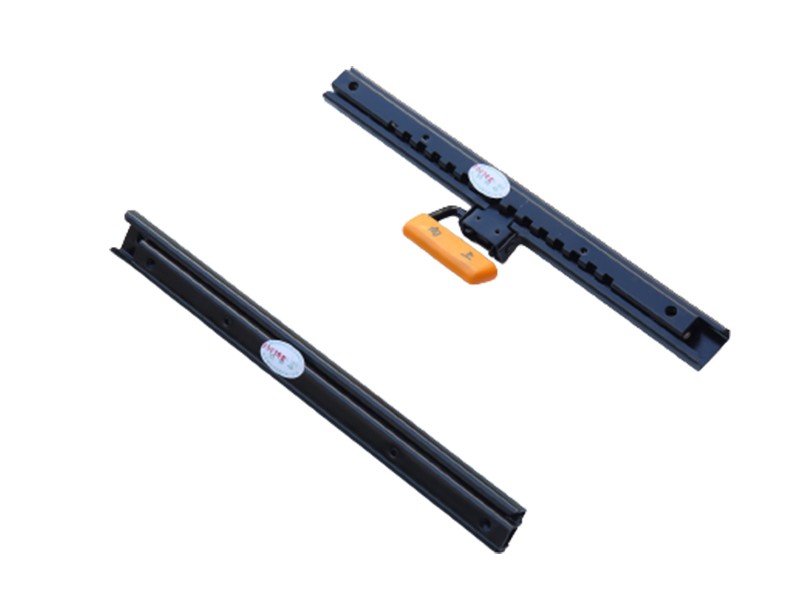

Over time, the factory grease applied at the time of assembly dries out, oxidises, or gets contaminated by dust, carpet fibres, and food crumbs that fall through the gap between the seat cushion and the centre console. Once the lubricant film breaks down, metal surfaces make direct contact with each other, causing:
Stiff or binding movement when sliding the seat fore and aft.
Uneven or incomplete locking — one side catches while the other does not, leaving the seat at a slight angle to the steering wheel.
Squeaking or grinding noise during adjustment or even when simply shifting weight.
Accelerated wear and corrosion on the rail surfaces, shortening the service life of the entire mechanism.
The 4 Best Lubricants for Car Seat Rails
Not every lubricant on the shelf is suitable for car seat rails. The ideal product must reduce friction without attracting excessive dust, stay stable across a wide temperature range (vehicle interiors regularly reach 60–80 °C / 140–176 °F in direct summer sun), and be safe for any plastic or rubber components near the track.
| Lubricant Type | Best For | Dust Attraction | Temperature Stability | Durability | Ease of Application |
|---|---|---|---|---|---|
| White Lithium Grease (NLGI 2) | Metal-to-metal rail contact, heavy-duty seats | Moderate | Excellent (−40 °C to 130 °C) | Very high — 18–24 months | Spray or brush |
| Dry PTFE / Teflon Spray | Ball-bearing rails, cleanliness-sensitive areas | Very low | Good (−20 °C to 120 °C) | Moderate — 12–18 months | Spray |
| Silicone Spray | Plastic glide pads, rubber seals near rails | Low | Good (−30 °C to 120 °C) | Moderate — 12 months | Spray |
| Molybdenum Disulfide (Moly) Grease | Extreme-pressure locking pin and pivot points | Low to moderate | Excellent (−40 °C to 150 °C) | High — up to 24 months | Brush or tube |
White Lithium Grease
White lithium grease is the most widely recommended lubricant for car seat rails. It is a NLGI Grade 2 grease, which means it has a consistency similar to peanut butter — firm enough to stay on vertical and angled surfaces without dripping, yet fluid enough to work its way into tight clearances when the seat slides. It offers excellent corrosion resistance and works well across a broad temperature range. Learn more about how grease grades are standardised in the NLGI consistency number classification on Wikipedia.
The main trade-off is that grease — even white lithium grease — can attract fine particles over time, particularly on car seat rails that are exposed to carpet fibres and road dust. Applying a thin, even layer (rather than packing the track) greatly reduces this problem.
Dry PTFE (Teflon) Spray
Dry PTFE spray works by depositing a solid film of polytetrafluoroethylene on the rail surfaces as the solvent carrier evaporates. Because the finished surface is dry to the touch, it resists dust far better than any grease-based product. This makes it particularly well suited for ball-bearing car seat rail mechanisms, where any viscous lubricant can actually wash the balls out of their retainer cage if overapplied. The downside is a slightly shorter service life; re-application may be needed after 12–18 months in high-use vehicles.
Silicone Spray
Silicone spray is a good choice whenever the car seat rail assembly includes rubber seals, nylon end-caps, or plastic glide pads, since silicone is chemically inert and will not cause those materials to swell or degrade. It provides smooth, quiet movement and is easy to apply with a precision nozzle. Its main limitation is that it does not provide quite as much load-carrying capacity as lithium grease, so it may not be the best option for heavy-duty or frequently adjusted seats such as commercial vehicle driver seats.
Molybdenum Disulfide Grease
Moly grease is an extreme-pressure lubricant often used on locking pins and pivot points rather than the full rail surface. Its solid lubricant particles bond to metal under high contact pressure, providing a very durable protective film. It is worth considering for older vehicles or heavy-duty applications where car seat rails experience significant lateral loading.
What NOT to Use on Car Seat Rails
Choosing the wrong product can do more harm than no lubricant at all. The following should be avoided:
Standard WD-40 — This product is primarily a water displacer and light penetrant, not a long-term lubricant. It evaporates quickly, leaving the car seat rails dry within days, and its solvent component can wash away any residual factory grease.
Motor oil or gear oil — Far too thin and runny. These will drip onto carpet and upholstery, and they attract dirt rapidly, turning into an abrasive paste inside the car seat rail channel.
Cooking or vegetable oils — These oxidise and turn rancid, creating a gummy residue that is extremely difficult to clean out of car seat rails and that can attract insects.
Thick bearing grease (NLGI 3 or above) — Too stiff for the close tolerances of automotive seat rails. It can actually impede movement rather than assist it, especially in cold weather.
Chain lube (petroleum-based) — While sometimes used as a field expedient, many formulations contain solvents that degrade rubber components and leave a sticky residue that accelerates contamination of the car seat rail.
Step-by-Step: How to Lubricate Car Seat Rails
The process takes roughly 20–30 minutes per seat and requires no special tools beyond a vacuum, a small brush, and the chosen lubricant.
Materials Needed
Vacuum cleaner or compressed air
Stiff bristle brush or old toothbrush
Isopropyl alcohol (≥70%) and clean cloths
Chosen lubricant (spray or brush-on)
Small acid brush (for applying grease)
Disposable gloves and safety glasses
Microfibre cloths for clean-up
Expose the full length of the car seat rails. Slide the seat all the way forward to expose the rear section of the rails, then all the way rearward to expose the front section. This ensures every part of the track is accessible.
Remove loose debris. Use a vacuum with a crevice nozzle to remove crumbs, carpet fibres, coins, and other debris from the car seat rail channel. Follow with compressed air to dislodge anything remaining in corners and locking pin holes.
Scrub away old dried grease. Work a stiff brush along the inner face of the rails to break up hardened, contaminated lubricant. Wipe down all accessible surfaces with a cloth dampened with isopropyl alcohol. Allow the rails to dry fully — typically 5–10 minutes — before applying fresh lubricant.
Apply lubricant sparingly. For spray lubricants: hold the nozzle 10–15 cm from the rail and apply a thin, even coat along the entire upper and lower contact surfaces. For grease: use an acid brush to apply a thin layer on the contact surfaces only — do not pack the channel. Apply to the locking pin and its socket as well.
Work the seat back and forth. Slide the seat through its full travel range at least 5–6 times. This distributes the lubricant evenly across all contact surfaces inside the car seat rail and ensures the locking mechanism is coated.
Test the locking mechanism. Lock the seat at several positions along the rail, then apply forward and rearward pressure by hand. The seat must feel absolutely rigid at every locked position. If it moves or rocks, check that the locking pin is fully engaged on both rails.
Wipe up any excess. Use a clean microfibre cloth to remove any lubricant that has migrated onto carpet, seat fabric, or plastic trim. Overspray or excess grease on carpet is very difficult to remove once it sets.
How Often Should Car Seat Rails Be Lubricated?
There is no universal mileage or time interval for lubricating car seat rails, as it depends on usage frequency, climate, and rail design. The table below provides practical guidelines:
| Usage / Environment | Recommended Interval |
|---|---|
| Normal passenger car, temperate climate | Every 18–24 months |
| High-use vehicle (taxi, delivery, fleet) | Every 12 months |
| Vehicle in coastal / high-humidity environment | Every 12 months (corrosion risk) |
| Off-road or dusty environment | Every 6–12 months |
| Any time stiffness, noise, or uneven locking appears | Immediately |
The most effective preventive measure is simply vacuuming under the seats regularly. The majority of car seat rail problems start with debris accumulation rather than lubricant depletion.
Lubricating Car Seat Rails on Power-Adjustable Seats
Power seat mechanisms combine a standard sliding rail — identical in principle to a manual unit — with an electric motor that drives a worm-gear lead screw to move the seat. The lubrication requirements for the rail portion are the same as for a manual car seat rail: white lithium grease or dry PTFE on the track surfaces, with a small amount on the lead screw thread as well.
The worm gear and lead screw on a power seat benefit from a slightly heavier grease than the slide rails — a NLGI Grade 2 multi-purpose grease works well here too. Avoid spray lubricants near the electric motor housing, as solvents can damage motor windings and wiring insulation.
Signs That Car Seat Rails Need More Than Lubrication
Lubrication resolves the vast majority of car seat rail issues, but some symptoms point to mechanical damage that no lubricant can fix:
The seat rocks or tips sideways even when locked — the locking teeth in the rail may be worn or broken.
Grinding or clunking continues after cleaning and lubrication — a ball bearing may have failed, or a roller has flattened.
The seat will only lock in some positions but not others — the locking pin itself may be bent, or the locking holes in the rail are damaged.
Visible cracks, bends, or corrosion pitting on the rail body — the structural integrity of the car seat rail is compromised; replacement is necessary.
In these cases, the car seat rails should be inspected by a qualified technician, and replacement should be considered if structural integrity cannot be confirmed.
Looking for High-Quality Car Seat Rails?
SANBO has been engineering precision seat sliders and car seat rails for automotive, commercial vehicle, and heavy-duty applications for decades. If a reliable car seat rails manufacturer is needed — for OEM supply, custom specifications, or wholesale orders — SANBO is the right partner.
Request a Free Quote from SANBOManual vs. Ball-Bearing Car Seat Rails: Does the Lubricant Choice Change?
Car seat rails fall into two broad mechanical categories, and the lubricant choice does differ slightly between them:
Metal-on-metal (ballless) rails — The inner and outer rails slide directly against each other, often with stamped nylon or metal contact pads. These benefit most from white lithium grease or moly grease, which provide a thick film to separate the surfaces under load. See SANBO's ballless car seat slide rail series for reference on this design.
Ball-bearing rails — Steel balls or cylindrical rollers run in a cage between the inner and outer profiles. These require a lighter lubricant — dry PTFE spray is ideal — because heavy grease can displace the balls from their retainer or impede their rolling action. See SANBO's premium car seat slider mechanism for an example of a ball-bearing design.
When the rail type is not known, dry PTFE spray is the safer general-purpose choice because it will not overload a ball-bearing mechanism while still providing effective lubrication for sliding-contact designs.
Summary
Keeping car seat rails properly lubricated is a straightforward task that most drivers can carry out at home in under 30 minutes. The right lubricant depends on the rail design: white lithium grease (NLGI Grade 2) for metal-to-metal track surfaces, dry PTFE spray for ball-bearing mechanisms and cleanliness-sensitive applications, and silicone spray where plastic or rubber components are involved. Regardless of the product chosen, the preparation step — cleaning out debris and old dried grease with a brush and isopropyl alcohol — is what determines whether the fresh lubricant will actually do its job.
Lubricating car seat rails every 12–24 months, combined with regular vacuuming under the seats, is usually all that is needed to keep the adjustment mechanism smooth, quiet, and reliable for the life of the vehicle.
Frequently Asked Questions
Standard WD-40 is a penetrant and water displacer, not a long-term lubricant. It evaporates within days and can wash away any remaining factory grease in the car seat rails. A proper lubricant such as white lithium grease or dry PTFE spray should be used instead.
Under normal use in a temperate climate, car seat rails benefit from fresh lubrication every 18–24 months. High-use vehicles, coastal environments, or off-road use may require lubrication every 6–12 months. Any time the seat feels stiff, noisy, or fails to lock evenly, the rails should be cleaned and lubricated immediately regardless of the time elapsed.
Without lubrication, car seat rails develop metal-on-metal friction that causes stiff or binding movement, squeaking or grinding noise, uneven locking (where one side catches before the other), accelerated wear of the rail surfaces, and corrosion. In severe cases this can create a seat that does not lock securely — a genuine safety hazard.
Yes. Silicone spray is chemically inert and safe for rubber seals, plastic glide pads, and nylon components. It is a good choice when the car seat rails include significant plastic elements that could be degraded by petroleum-based lubricants.
The sliding rail section of a power seat uses the same lubricant as a manual rail — white lithium grease or PTFE spray on the track surfaces. The lead screw (worm gear) that the motor drives benefits from a NLGI Grade 2 multi-purpose grease applied sparingly on the thread. Spray lubricants should be kept away from the motor housing to avoid damaging the wiring.
If the car seat rails remain stiff after cleaning and applying fresh lubricant, the cause is usually debris still trapped deeper in the channel, a bent rail section, worn or broken ball bearings, or a deformed locking pin. Removing the seat and working on the rails inverted on a flat surface allows better access for thorough cleaning. If the rail body itself is bent or cracked, replacement is the appropriate solution.
Both are good choices, but for different rail types. White lithium grease (NLGI Grade 2) provides more durable protection for metal-to-metal sliding rails and locking mechanisms. Dry PTFE spray is better for ball-bearing rails and environments where minimal dust accumulation is a priority, since the dry film it leaves does not attract particles the way grease does.