





Can You Put a Swivel Seat in Any Car?
Swivel seats, also known as rotating seat bases or seat turntables, are one of the most popular modifications for RVs, camper vans, and wheelchair-accessible vehicles. They let a seat rotate to face the cabin, which makes entry, loading, and living space much easier. The question most buyers ask before ordering is simple: can I put a swivel seat in any car? The honest answer is that it depends on the vehicle's seat structure, floor space, and mounting pattern, not on the brand of the car.
This guide explains how a seat swivel works, the real constraints that decide whether a seat swivel will fit a given vehicle, the differences between seat swivel types, and a simple three-step check buyers can do before purchasing.
Key Takeaways
A seat swivel fits when the seat mounting pattern, rotation clearance, and load capacity are compatible; vehicle brand alone does not decide compatibility.
Locking swivels, free-rotating swivels, and heavy-duty swivels suit different applications, from RVs and commercial vans to industrial equipment.
Rotation clearance matters as much as the mounting holes: a typical full 360° rotation needs roughly 30 cm of free space behind or beside the seat, depending on the vehicle.
Power seats, heating wires, and side airbag zones require careful routing or professional evaluation during installation.
Before buying, check the seat base anchor points, measure the rotation space, and confirm the hole pattern or order a customized seat swivel base.
What Is a Seat Swivel and How Does It Work?
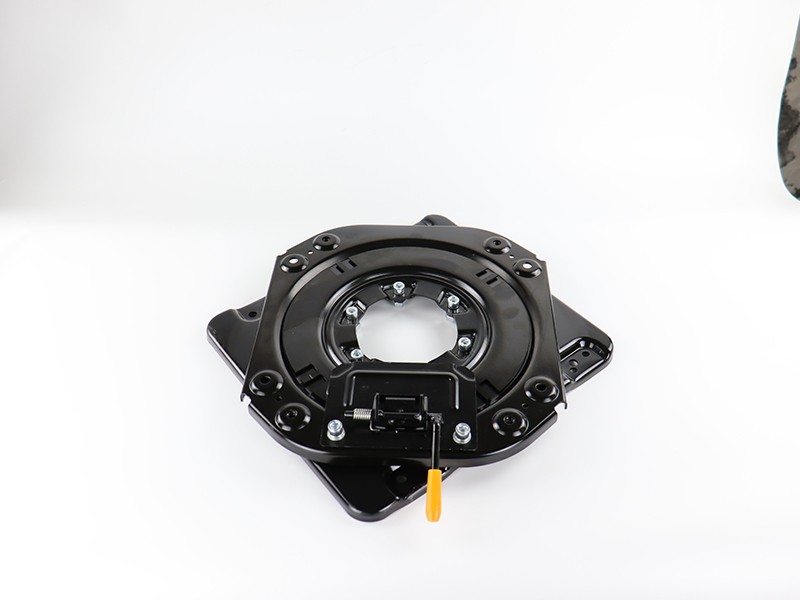
A seat swivel is a mechanical device installed between the vehicle floor and the seat base. It consists of two steel plates connected by a bearing system, with a locking mechanism that holds the seat at preset angles. The lower plate bolts to the floor anchors, and the upper plate bolts to the seat frame. When the user releases the lock, the seat rotates up to 360 degrees and locks again automatically at the designated positions, usually every 90 degrees in locking designs.
Quality swivel bases use precision ball bearings for smooth rotation, high-strength steel plates for stability, and a positive locking pin that prevents wobble or unintended rotation during driving. These features directly affect how safe and stable the seat remains after conversion.
Can Any Car Take a Swivel Seat? The Real Constraints
Compatibility is determined by four practical constraints rather than by vehicle brand. Understanding them explains why some vehicles are easy to convert and others need special parts.
1. Seat Structure and Mounting Pattern
The swivel base must match the seat frame above and the floor anchors below. Sports seats with heavily curved bases, integrated armrests, or unusual bolt patterns may need an adapter plate or a custom hole pattern. In practice, many standard swivels offer adjustable mounting holes, and manufacturers can also produce a custom upper plate from the seat's bolt dimensions.
2. Rotation Clearance Inside the Cabin
A swivel only adds value if the seat can actually rotate without hitting the dashboard, center console, door trim, or steering wheel. Compact cars often have limited space between the seat and surrounding panels, which restricts rotation to a smaller arc or requires repositioning the seat first. As a rough guide for planning: if there is roughly 30 cm or more of free space behind or beside the seat, full 360° rotation is realistic; with less space, the rotation range may be limited to 180° or require a slimmer mounting profile. These figures are practical experience values, not a standard, and the actual result depends on the exact vehicle. This clearance check is where a seat swivel plan succeeds or fails in practice.
3. Load Capacity and Safety Requirements
The seat swivel must support the weight of the occupant, the seat, and the forces generated during braking and cornering. High-strength steel plates and a robust locking mechanism are what make a swivel safe under load. Installers should also respect the vehicle's own seat mounting points, since the floor anchors and seat frame were originally engineered for the original seat. In the United States, seat systems are covered by federal motor vehicle safety requirements, and aftermarket modifications that affect seating should be reviewed with the vehicle manufacturer or a qualified converter.
4. Electrical and Safety Systems
Power seats contain motors, wiring looms, and position sensors; heated seats carry heating elements and connectors. A swivel installation must not pinch these wires when the seat rotates. Side airbags deploy from the seat or door area, so the airbag deployment zone should never be blocked or modified without professional assessment. In addition, conversion should not cover or remove child-seat anchors where they exist, since those anchor points remain part of the vehicle's safety equipment.
Types of Seat Swivels and Typical Applications
Seat swivels are generally divided into three families, and the right choice depends on how the seat will be used.
| Swivel type | Rotation behavior | Typical applications |
|---|---|---|
| Locking swivel | Rotates 360°, locks automatically at preset angles (often every 90°) | RVs, camper vans, commercial vehicles where the seat must stay fixed while driving |
| Free-rotating swivel | Continuous 360° rotation without fixed lock points | Workstations, lounge seating, applications needing frequent reorientation |
| Heavy-duty swivel | Thicker plates and stronger lock, rated for high loads and intensive use | Truck seats, construction machinery, captain's chairs, medical and military units |
Locking swivels are the most common choice for vehicle use, because the seat must be firmly held at a safe angle during travel. The one-handle release and auto-return locking feature used on many models makes rotation convenient without compromising the locked position.
How Manufacturers Adapt a Swivel to Different Vehicles
Universal fitment does not mean one identical part for every car. It means a seat swivel base that can be adapted to many vehicles through three mechanisms:
Adjustable mounting holes: Slotted or multi-position holes let the upper plate match different seat bolt patterns. For example, one universal seat swivel base uses an upper mounting hole pitch of 290 × 328 mm as its standard configuration.
Adapter plates: A dedicated plate bridges unusual seat frames or floor anchor layouts without weakening the mounting points.
Custom hole patterns: For OEM projects, the swivel is machined to the exact seat base or pedestal drawing, which is how seat swivel manufacturers serve production lines that need thousands of identical parts.
This is why the same core mechanism can be fitted to a Buick GL8, a Mercedes-Benz Vito, a Sprinter, or a Wuling van, with different upper plates or hole patterns for each. Compatibility therefore comes from engineering adaptation, not from one bracket magically fitting everything.
Vehicle Categories and Typical Fitting Results
Real-world fitting experience falls into recognizable patterns by vehicle category. The table summarizes what buyers commonly find.
| Vehicle category | Typical swivel solution | Main consideration |
|---|---|---|
| MPVs and passenger vans (e.g., Buick GL8, Iveco, Transit) | Locking swivel with raised or reinforced base | Door clearance during rotation, second-row seat pitch |
| RVs, camper vans, caravans | Locking 360° turntable, often with manual unlock handle | Floor anchor strength, bed-to-seat conversion layout |
| Commercial vans and Sprinters (e.g., Sprinter, Lorinser, Caravelle, Multivan) | Locking swivel with vehicle-specific hole pattern | Seat side brackets, harness routing for swivel seats |
| Trucks and special vehicles | Heavy-duty swivel with reinforced plates | Higher load rating, vibration and intensive use |
| Passenger cars and sedans | Slim-profile swivel, sometimes limited rotation | Compact cabin space, curved seat bases, power seat wiring |
Vehicles that need extra caution include older cars without modern seat anchor points, zero-gravity or fully integrated seats where a swivel may limit recline angles, and special builds such as armored or medical vehicles that require a joint engineering review.
How to Check Compatibility Before Buying
Buyers can complete a basic compatibility check in three steps without any special tools.
Inspect the seat base and floor anchors. Slide the seat fully forward and note how the seat frame bolts to the floor. Compare the bolt pattern with the swivel's mounting hole options, or take photos and dimensions for a custom upper plate.
Measure rotation space. With the seat in the installed position, estimate the free space behind and beside it. Roughly 30 cm of clearance supports full rotation; tighter cabins generally allow a limited arc. Also confirm the seat can move forward or recline enough to create room during rotation.
Confirm electrical and safety items. Check for power seat wiring, heating elements, and airbag sensors in the seat area, and confirm whether child-seat anchors exist. When in doubt, ask the seat swivel manufacturer for the seat's bolt dimensions or request a custom hole pattern based on your vehicle.
To see how these criteria apply in practice, buyers can compare three representative seat swivel models designed for different vehicle groups:

Grammer 360° Universal Seat Swivel Turntable Base
Universal conversion kit with adjustable mounting holes and multi-point locking, suited to commercial vans, MPVs, and sedans.
View Product
360° Rotating Car Seat Swivel Mechanism
Locking seat swivel base with single-handle unlock and auto-return locking for Buick GL8, Iveco, and Transit passenger seating.
View Product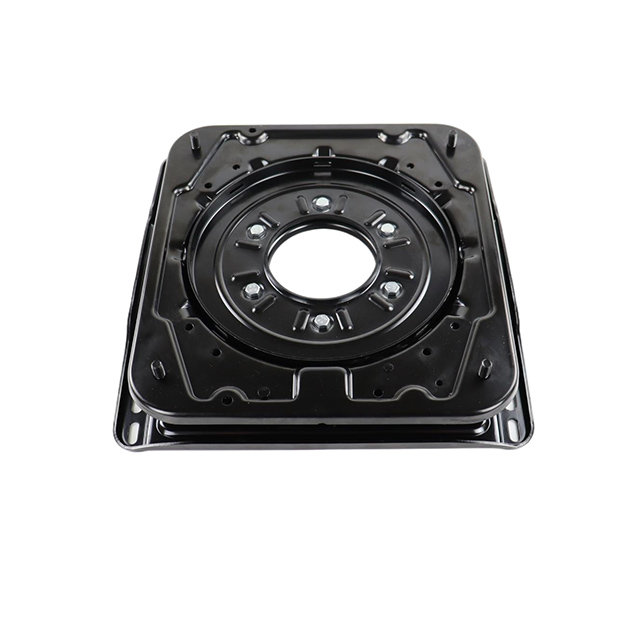
RV & Camper Van Seat Swivel Mechanism
360° turntable with multi-position positive locking and safety stops for RVs, motorhomes, camper vans, and caravans.
View ProductNeed a Swivel That Fits Your Seat?
SANBO designs and manufactures seat swivel mechanisms from universal conversion kits to fully customized OEM hole patterns, with steel construction, smooth bearing rotation, and positive locking. Send an inquiry with your vehicle model, seat type, and mounting dimensions for a compatibility review.
Get a QuoteView Seat Swivels →Conclusion
Putting a swivel seat in a car is less about the vehicle brand and more about seat structure, rotation space, load capacity, and safety systems. Locking, free-rotating, and heavy-duty swivels cover different use cases, while adjustable hole patterns, adapter plates, and custom machining extend compatibility to most vehicles. Buyers who check the mounting points, measure the cabin space, and confirm the electrical items before ordering will get a conversion that rotates smoothly and stays firmly locked when it should.
For buyers looking for a dependable seat swivel manufacturer, SANBO offers standard and customized swivel bases, engineering support for OEM projects, and a range of locking, free-rotating, and heavy-duty designs.
FAQ
Most vehicles can be converted, but compatibility depends on the seat mounting pattern, cabin clearance, and load capacity rather than the brand. Vehicles with unusual seat bases or very tight cabins may need adapter plates, a customized hole pattern, or a limited rotation range.
As a practical guideline, roughly 30 cm of free space behind or beside the seat supports full 360° rotation. With less space, the rotation range may be limited to about 180° or the seat may need to be repositioned before rotating.
Swivel seats should be installed with the vehicle's safety systems in mind. The seat must remain firmly locked while driving, and the installation must not interfere with power seat wiring, heating elements, side airbag zones, or child-seat anchors. Professional review is recommended where these systems are present.
A locking swivel holds the seat firmly at preset angles, usually every 90°, and is the standard choice for vehicles. A free-rotating swivel turns continuously without fixed lock points and suits workstations or lounge seating where constant reorientation is needed.
Load capacity depends on the model, steel thickness, bearing system, and lock design. Heavy-duty swivels are built for trucks, machinery, and intensive use, while standard vehicle swivels are sized for passenger seating. Buyers should match the load rating to the seat, occupant, and application.
Check the seat base bolt pattern and floor anchors against the swivel's mounting hole options, or provide the seat dimensions and vehicle model to the manufacturer. Custom upper plates can be made from the seat's bolt pattern when standard holes do not match.
References and Notes
NHTSA — U.S. National Highway Traffic Safety Administration, source of federal motor vehicle safety standards covering vehicle seating systems: https://www.nhtsa.gov/.
NMEDA — National Mobility Equipment Dealers Association, which sets quality assurance criteria for vehicle mobility modifications: https://www.nmeda.org/.
SAE International — professional organization for automotive engineering standards and testing practices: https://www.sae.org/.
Rotation-clearance figures (roughly 30 cm for full rotation) and vehicle-category fitting results are practical experience values used for planning; actual results vary by vehicle and installation.
Company and product information (swivel families, single-handle unlock and auto-return locking, upper mounting hole pitch of 290 × 328 mm, heavy-duty construction, OEM customization) is stated according to SANBO and was not independently verified by this article: https://www.czsanbo.com/Seat-swivels.html.
Product images are from the SANBO website and are used for illustration of the referenced product lines.