





Low-Profile RV Driver Seat Swivels: How to Add Rotation Without Losing Headroom in Campervans
Converting a campervan into a comfortable living space requires smart decisions about every inch of interior height. For many RV and campervan owners, installing seat swivels seems like an obvious upgrade for better space utilization, but traditional swivel bases can rob precious headroom in vehicles that already have limited vertical clearance. Low-profile seat swivels offer a practical solution, adding rotation functionality while minimizing height increase and preserving the ergonomic driving position that campervan enthusiasts need.
Key Takeaways
Low-profile RV driver seat swivels typically add only 20-25mm of height compared to standard swivels that can raise seats by 30-50mm or more
Headroom preservation is critical in campervans, where interior heights range from 1.3m to 2.1m depending on roof configuration
Quality seat swivel mechanisms must comply with automotive safety standards while providing smooth 360-degree rotation
Proper installation requires consideration of handbrake positioning, seat belt anchoring, and electrical connections
Material selection and engineering design directly impact swivel durability and long-term performance
Understanding the Headroom Challenge in Campervan Conversions
Headroom represents one of the most significant constraints in campervan design. According to industry data, standard roof campervans typically provide interior heights between 130cm and 180cm, while high-roof variants offer 200cm to 213cm of clearance. Every millimeter counts when designing a comfortable living space, particularly for taller individuals who already struggle with restricted vertical space.
When installing aftermarket components like seat swivels, RV owners face a direct trade-off between functionality and headroom. Traditional seat swivel bases can add 30mm to 50mm of height between the vehicle floor and seat cushion. For someone who is 180cm tall sitting in a standard-roof van with 170cm of interior height, even an additional 25mm can make the difference between comfortable driving and constant head contact with the ceiling.
The headroom issue becomes particularly acute in vehicles like the Ford Transit, Mercedes Sprinter, and Ram ProMaster when configured with standard roofs. These popular conversion platforms sacrifice vertical space for better fuel economy, easier parking, and lower purchase costs. Low-profile seat swivels address this concern by minimizing the height addition while still delivering full rotation capability.
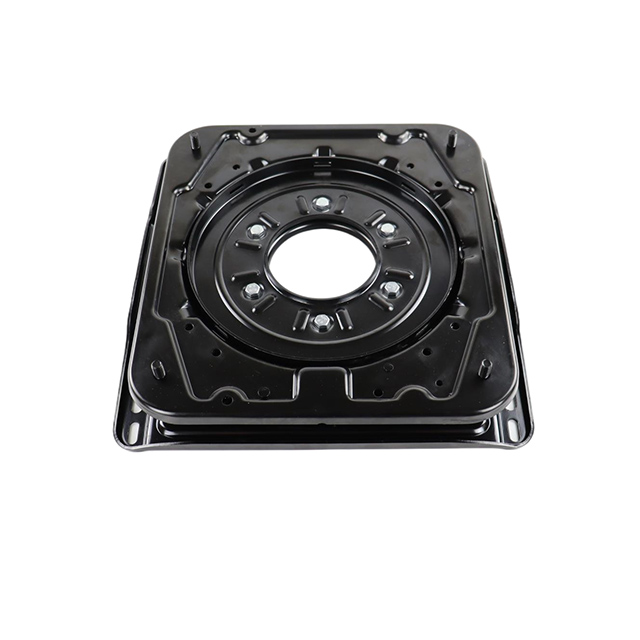
What Makes a Seat Swivel "Low-Profile"
The term "low-profile" in the context of RV driver seat swivels refers to the minimal vertical space the mechanism occupies when installed between the vehicle floor mounting points and the seat base. Engineers achieve low-profile designs through several technical approaches, including optimized bearing systems, compact locking mechanisms, and efficient material utilization.
A typical low-profile seat swivel adds approximately 20mm to 25mm of height. This measurement represents the total thickness of the swivel plate assembly, including the rotating bearing surface, locking mechanism, and mounting hardware. By comparison, standard swivel bases often add 30mm to 45mm, while some basic designs can increase seat height by 50mm or more.
The engineering challenge lies in maintaining structural integrity and safety compliance while reducing thickness. According to automotive safety standards, seat mounting systems must withstand significant forces during collision events. Low-profile designs accomplish this through high-strength steel construction, precision machining, and load distribution engineering that concentrates strength in minimal vertical space.
Technical Specifications That Matter
When evaluating low-profile seat swivels for RV and campervan applications, several technical specifications directly impact performance and user satisfaction. Understanding these specifications helps buyers make informed decisions that balance cost, functionality, and safety.
| Specification | Low-Profile Range | Standard Range | Impact on Performance |
|---|---|---|---|
| Height Addition | 20-25mm | 30-50mm | Preserves headroom and driving ergonomics |
| Rotation Range | 360 degrees | 360 degrees | Full rotation for maximum flexibility |
| Weight Capacity | 120-150kg | 120-150kg | Accommodates users of various sizes |
| Plate Thickness | 5-6mm steel | 5-8mm steel | Ensures structural integrity |
| Unit Weight | 12-15kg | 15-20kg | Affects overall vehicle weight |
Material selection plays a crucial role in achieving low-profile designs without compromising strength. High-grade steel remains the industry standard for seat swivel construction, offering excellent load-bearing characteristics and durability. The steel typically undergoes surface treatments such as electrocoating or powder coating to prevent corrosion, which is essential for RVs that may encounter various environmental conditions.
The locking mechanism represents another critical specification. Quality low-profile seat swivels incorporate positive locking systems that engage at multiple rotation points, typically every 90 degrees. This allows users to securely lock the seat facing forward for driving, sideways for entry and exit, or backward for social seating arrangements. The locking mechanism must operate smoothly while providing confidence that the seat will not rotate unexpectedly during vehicle operation.
Installation Considerations and Common Challenges
Installing a low-profile RV driver seat swivel requires careful attention to vehicle-specific details. While the basic installation process involves removing the factory seat, attaching the swivel base to the floor mounting points, and securing the seat to the swivel, several factors can complicate the procedure.
Handbrake positioning presents a common challenge, particularly in driver-side installations. Many vans feature floor-mounted parking brakes that occupy space directly adjacent to the driver seat mounting area. When a seat swivel is installed, the increased height can cause the seat to contact the handbrake during rotation. Manufacturers address this through handbrake relocation kits that lower the brake lever assembly, creating adequate clearance for seat rotation.
Seat belt anchoring requires special attention during installation. According to Federal Motor Vehicle Safety Standard No. 207, seat belt anchorages must maintain their integrity and positioning relative to the seat. When installing a swivel base, installers must ensure that seat belt pretensioners, buckles, and anchor points remain properly positioned and that all electrical connections for seat belt sensors function correctly.
Electrical considerations vary by vehicle model. Modern seats often incorporate multiple electrical systems, including airbag sensors, seat position sensors, heating elements, and lumbar adjustment motors. The wiring harness must have sufficient slack to accommodate seat rotation without creating tension or disconnecting. Some installations require harness extensions or careful routing to prevent wire damage during swivel operation.
Installation Best Practices
Always disconnect the vehicle battery before beginning installation to prevent airbag deployment
Use a torque wrench to tighten mounting bolts to manufacturer specifications, typically 40-50 Nm
Test full rotation range before final assembly to identify any interference issues
Verify that all electrical connections remain secure throughout the rotation range
Check seat belt operation in all swivel positions to ensure safety compliance
Comparing Low-Profile Options for Popular Campervan Models
Different campervan platforms present unique challenges and opportunities for seat swivel installation. The Ford Transit, Mercedes Sprinter, and Ram ProMaster represent the three most popular base vehicles for campervan conversions, each with specific considerations for low-profile seat swivel selection.
For Ford Transit vans from 2014 onwards, low-profile swivels must accommodate the vehicle's specific floor pan design and seat mounting pattern. Transit models with 10-way power seats require particular attention, as the seat control module housing can interfere with swivel rotation. Some aftermarket solutions address this through modified trim pieces that provide adequate clearance. The Transit's available front-wheel-drive configuration offers an advantage for campervan builders, as FWD models feature a lower floor height that provides approximately 2.125 meters of interior height in high-roof variants, compared to roughly 2.02 meters for rear-wheel-drive models.
Mercedes Sprinter applications benefit from the vehicle's robust construction and relatively standardized seat mounting systems across model years. Sprinter vans from 2007 to present utilize similar mounting patterns, allowing for broad compatibility with aftermarket low-profile swivel bases. The Sprinter's optional 4x4 capability makes it popular for overlanding applications, where seat swivels enhance livability during extended off-grid camping. However, Sprinter models with factory air suspension seats present installation challenges that may require additional spacers or modified mounting approaches.
Ram ProMaster vans present a unique situation due to their seat belt buckle positioning. The factory seat belt buckles on ProMaster models sit in a location that can interfere with swivel rotation. While this initially required spacing bars that increased the total height addition to approximately 38mm, experienced installers have developed modification techniques that reduce the added height to approximately 25mm while maintaining seat belt functionality and safety compliance.
Safety Standards and Certification Requirements
Safety compliance represents a non-negotiable aspect of seat swivel selection for RV and campervan applications. Seat mounting systems must meet stringent requirements to protect occupants during collision events. In Europe, the TUV certification process evaluates seat swivels against established safety criteria, while North American markets reference standards such as those published by the Society of Automotive Engineers.
The fundamental safety concern involves maintaining seat integrity during frontal, side, and rear impact scenarios. According to established testing protocols, seat anchorages must withstand forces of 20 times the seat mass applied horizontally through the center of gravity. Low-profile seat swivels must distribute these loads effectively while adding minimal height, requiring sophisticated engineering to achieve the necessary strength-to-thickness ratio.
Locking mechanism reliability constitutes another critical safety element. The swivel must positively engage in the locked position and should not disengage due to vibration, road shock, or occupant movement. Quality designs incorporate spring-loaded detent systems or mechanical pawls that require deliberate action to unlock. Some advanced designs include visual indicators that confirm the lock is fully engaged, providing additional peace of mind for users.
Seat belt integration affects overall occupant safety. The seat belt system must maintain proper geometry relative to the occupant's body in all seating positions. When a seat rotates 180 degrees, the seat belt anchorages rotate as well, which can affect the belt's ability to properly restrain the occupant. For this reason, seat belts should only be used when the seat faces forward in the driving position, and occupants should not rely on seat belt protection when the seat is rotated for social seating.
Material Engineering and Durability Factors
The materials and manufacturing processes used in low-profile seat swivel construction directly influence long-term performance and reliability. High-quality swivels utilize cold-rolled steel plate that has been precision-cut and formed to exact specifications. The steel thickness typically ranges from 5mm to 6mm, providing strength while minimizing overall height.
Surface treatment prevents corrosion and extends service life. Electrocoating, also known as e-coating, provides uniform coverage that reaches into recessed areas and tight spaces where traditional spray coating might miss. This comprehensive protection proves particularly important for RVs that may be stored outdoors or operated in coastal environments where salt exposure accelerates corrosion. Alternative finishes include powder coating and zinc plating, each offering different balances of cost, durability, and aesthetic appearance.
Bearing surfaces require special attention in low-profile designs. The rotating interface must provide smooth operation over thousands of cycles while maintaining tight tolerances that prevent unwanted play or wobble. Some manufacturers employ hardened steel races with ball bearings, while others use self-lubricating polymer bushings. Each approach offers advantages, with ball bearing systems typically providing the smoothest rotation and longest service life, while polymer bushing designs can operate quietly and require no maintenance.
Load distribution engineering ensures that forces are spread evenly across the mounting points and swivel components. Finite element analysis helps engineers optimize plate thickness, reinforcement rib placement, and bolt hole positioning to maximize strength while minimizing material use. This optimization becomes particularly important in low-profile designs where every millimeter of thickness must serve a structural purpose.
Real-World Performance and User Experience
Beyond technical specifications, the practical user experience with low-profile RV driver seat swivels reveals important insights about daily functionality and long-term satisfaction. Campervan owners report that the minimal height addition of low-profile designs makes a noticeable difference in driving comfort, particularly for individuals between 175cm and 190cm tall who find that every centimeter of headroom matters in standard-roof vans.
Rotation ease varies among different designs and manufacturers. The best low-profile swivels operate smoothly with minimal effort, requiring only slight pressure to initiate rotation and gliding freely through the full 360-degree range. Some users report that certain designs require significant force to rotate, particularly when new, though many of these systems improve with use as bearing surfaces polish through operation. Manufacturers typically recommend periodic operation and occasional light lubrication of accessible moving parts to maintain smooth rotation.
Noise and vibration characteristics affect user satisfaction. Quality low-profile swivels operate silently during normal use, with no clicking, grinding, or rattling sounds. During vehicle operation, the swivel base should not transmit additional vibration to the seat or create resonance that causes annoying buzzing. Some designs incorporate vibration-damping elements or careful tolerance control to minimize these issues.
Long-term durability testing by manufacturers typically includes cycle testing where seats are rotated thousands of times to simulate years of use. However, real-world conditions can exceed laboratory testing parameters. Factors such as road vibration, temperature cycling, moisture exposure, and occasional overloading can all affect longevity. Quality manufacturers stand behind their products with warranties that typically range from one to five years, reflecting their confidence in design and construction.
Cost Analysis and Value Considerations
Low-profile RV driver seat swivels typically command premium pricing compared to standard designs, reflecting the additional engineering and precision manufacturing required to minimize height while maintaining strength. Market prices generally range from $200 to $400 per swivel, with vehicle-specific models sometimes priced higher due to custom tooling requirements and lower production volumes.
When evaluating cost, campervan builders should consider the total value proposition rather than simply comparing retail prices. A low-profile swivel that adds only 23mm of height versus a budget option that adds 45mm can literally provide several hundred dollars of value through improved headroom, particularly in a vehicle where the alternative might be installing a pop-top roof or accepting reduced comfort. The quality of materials, smoothness of operation, and manufacturer warranty also factor into long-term value.
Installation costs vary based on whether the owner performs the work or hires a professional. A mechanically inclined individual with basic tools can typically install a seat swivel in two to four hours, following manufacturer instructions carefully. Professional installation through a van conversion shop might cost $150 to $300 per seat, including labor and any necessary additional components such as handbrake relocation kits. For those purchasing a professionally converted campervan, seat swivels are often included in the base package or available as a popular option.
Ready to Upgrade Your Campervan?
Finding a reliable supplier for low-profile seat swivels makes all the difference in your campervan conversion project. Quality matters when it comes to components that affect both safety and daily comfort.
SANBO METAL specializes in manufacturing precision-engineered seat swivel mechanisms for RV, MPV, and campervan applications. With over 40 years of experience in automotive seating components and ISO 9001 and IATF 16949 certifications, SANBO delivers reliable solutions backed by rigorous quality control. For professional-grade seat swivels that balance low-profile design with exceptional durability, connect with SANBO METAL to discuss your specific vehicle requirements.
Alternative Solutions for Headroom-Constrained Conversions
While low-profile seat swivels represent the most direct solution for adding rotation functionality without significantly impacting headroom, campervan builders working with extremely tight vertical constraints have developed alternative approaches. Understanding these options provides context for decision-making and may reveal better solutions for specific situations.
Fixed seating with removable bases offers one alternative. This approach uses quick-release mounting systems that allow seats to be completely removed from the vehicle when stationary. Once removed, the seats can be positioned anywhere in the campervan living space using portable pedestal bases or direct floor mounting. This system provides maximum flexibility but requires physical effort to reconfigure and offers no rotation capability while driving.
Pop-top roof installations directly address headroom limitations by providing additional vertical space when the vehicle is parked. Canvas or rigid pop-tops can add 300mm to 600mm of standing height, completely transforming the interior environment. However, pop-tops add significant cost (typically $3,000 to $8,000 installed), create additional maintenance requirements, and reduce stealth camping capability. They represent a comprehensive solution but require much larger investment than seat swivels alone.
Seat lowering modifications involve cutting and modifying the vehicle floor pan to recess seat mounting points, effectively lowering the seat position. This advanced fabrication technique can recover 25mm to 50mm of headroom but requires professional metalwork skills, may affect structural integrity if not properly executed, and can complicate future resale. Most campervan owners consider this approach only after exhausting simpler alternatives.
Maintenance and Long-Term Care
Proper maintenance extends the service life of low-profile RV driver seat swivels and ensures continued smooth operation. Unlike many vehicle components, seat swivels require minimal routine care, but several simple practices can prevent premature wear and maintain optimal performance.
Periodic cleaning removes accumulated dirt, dust, and debris that can interfere with bearing surfaces and locking mechanisms. A soft brush or compressed air effectively removes loose contamination from accessible areas. For more thorough cleaning, the seat can be removed from the swivel base, allowing complete access to all surfaces. Avoid using high-pressure water spray that might force contaminants into sealed bearing assemblies.
Lubrication requirements vary by design. Some low-profile swivels incorporate sealed bearings that require no additional lubrication throughout their service life. Others benefit from occasional application of light machine oil or lithium-based grease to accessible pivot points and sliding surfaces. Manufacturer instructions provide specific guidance on lubrication type and frequency. Over-lubrication should be avoided, as excess lubricant can attract dirt and create messy deposits.
Regular inspection identifies potential issues before they develop into serious problems. Users should periodically check for loose mounting bolts, unusual play or wobble in the rotation mechanism, difficulty engaging or disengaging the lock, and any signs of corrosion or damage to mounting surfaces. Tightening mounting bolts to specification once or twice annually helps prevent loosening due to vibration, particularly in vehicles used on rough roads or off-highway terrain.
Conclusion
Low-profile RV driver seat swivels solve a fundamental challenge in campervan conversion by adding rotation functionality while preserving precious headroom. These precision-engineered components typically add only 20mm to 25mm of height, compared to 30mm to 50mm for standard designs, making them particularly valuable in standard-roof vans where every millimeter of vertical space matters.
Successful implementation requires attention to vehicle-specific details including handbrake clearance, seat belt integration, and electrical connections. Quality low-profile swivels meet rigorous safety standards, utilize durable materials with appropriate surface treatments, and provide smooth, reliable operation over thousands of cycles. While premium pricing reflects sophisticated engineering, the value proposition proves compelling for owners who prioritize both functionality and comfort in their campervan conversions.
For those building or upgrading a campervan, low-profile seat swivels represent one of the most effective modifications for enhancing livability without compromising the driving experience. Careful product selection, proper installation, and basic maintenance ensure these components deliver years of reliable service, transforming fixed front seats into versatile seating that adapts to both travel and living modes.
Frequently Asked Questions
How much height does a low-profile seat swivel add?
Low-profile seat swivels typically add 20-25mm of height, compared to 30-50mm for standard designs. This minimal addition preserves headroom while enabling full 360-degree rotation.
Can I install a seat swivel myself?
Yes, mechanically inclined individuals can install seat swivels in 2-4 hours using basic tools. Always disconnect the battery first and follow manufacturer torque specifications for mounting bolts.
Do seat swivels affect safety?
Quality seat swivels certified to safety standards maintain crash protection when properly installed. However, seat belts should only be used when seats face forward in the driving position.
Will a swivel work with my power seat?
Most low-profile swivels accommodate power seats, but electrical wiring must have adequate slack for rotation. Some vehicles with complex power seat systems may require additional modifications.
How much does a low-profile seat swivel cost?
Quality low-profile seat swivels range from $200 to $400 per unit. Vehicle-specific models may cost more, and professional installation adds $150-$300 per seat if required.
What maintenance do seat swivels require?
Minimal maintenance is needed. Periodically check mounting bolt tightness, clean debris from moving parts, and apply light lubrication if manufacturer recommends. Quality swivels last for years with basic care.
Can I use a seat swivel with a handbrake between the seats?
Yes, but a handbrake relocation kit is typically required to lower the brake lever and provide clearance for seat rotation. Most swivel manufacturers offer compatible relocation kits.
Which campervan models work best with low-profile swivels?
Ford Transit, Mercedes Sprinter, and Ram ProMaster vans all accommodate low-profile swivels well. Vehicle-specific models ensure proper fit and easy installation for these popular platforms.