





Tips For Choosing The Right Seat Height Adjuster For Your Vehicle
Most drivers adjust their seat forward or backward without a second thought — but getting the vertical position right is just as critical. A correctly chosen seat height adjuster determines whether a driver can see clearly over the dash, reach the pedals comfortably, and maintain a posture that won't cause fatigue on a three-hour motorway run. Yet when it comes to specifying or purchasing a seat adjuster for a passenger car, truck, or specialty vehicle, the choices can feel overwhelming. This guide cuts through the complexity, covering every factor that actually matters — from vehicle type and load rating to adjustment range, actuation method, and quality certification — so buyers, fleet managers, and product engineers can make a confident, well-informed decision.
Key Takeaways
A seat height adjuster controls vertical seat position and directly affects driver visibility, pedal reach, and spinal posture.
Vehicle type is the single most important factor: passenger car, light truck, and heavy-duty commercial applications each require different load ratings and adjustment ranges.
Standard passenger-car height adjusters typically offer 40–60 mm of vertical travel; heavy-duty truck seats may need up to 120 mm.
Manual mechanisms dominate commercial and heavy-duty markets for their simplicity and durability; electric adjusters suit premium passenger vehicles.
Key quality indicators include material grade, surface treatment, torque capacity, locking reliability, and compliance with FMVSS No. 207 or ECE R17.
Choosing an IATF 16949-certified seat adjuster manufacturer is the fastest way to ensure consistent production quality for OEM applications.
What Is a Seat Height Adjuster — and Why Does It Matter?
A seat height adjuster is the mechanism that raises or lowers the seat cushion relative to the vehicle floor. It is one component within the broader family of seat adjustment mechanisms, which can also include recliner (angle) adjusters, fore-aft slide rails, and lumbar support systems. While recliner adjusters control seatback angle and slide rails handle fore-aft positioning, this mechanism exclusively manages vertical travel — that is, how high or low the occupant sits.
Getting this dimension right has direct consequences for safety and health. According to guidance from the Canadian Centre for Occupational Health and Safety (CCOHS), a driver should be positioned so that both feet rest flat on the floor with knees at roughly a 90-degree angle, while maintaining at least 25–30 cm of clearance between the chest and the steering wheel. Seat height that is set too low can impair visibility over the bonnet; too high and the driver may struggle to reach the pedals or lack adequate headroom.
For fleet operators and vehicle seat manufacturers, a poorly chosen height-adjustment component can also translate into increased warranty claims, driver complaints, and regulatory non-compliance. Understanding what to look for before specifying a component can prevent all of these problems downstream.
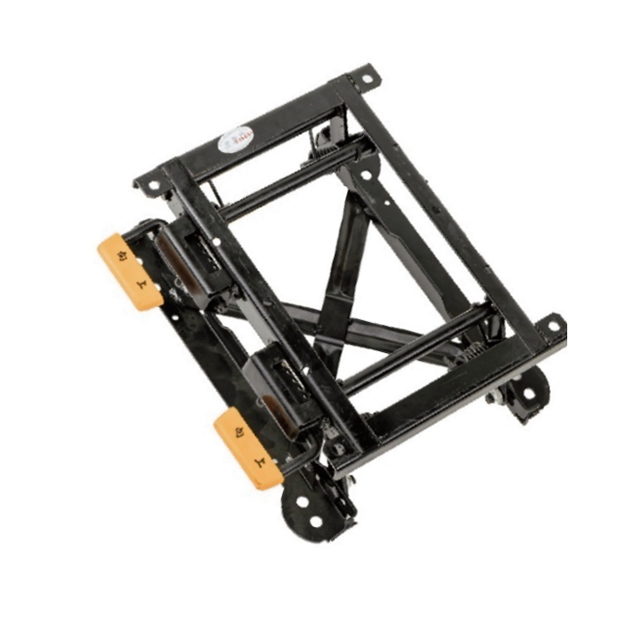
Tip 1 — Match the Adjuster to Your Vehicle Type
The single most important starting point is vehicle type. The load, vibration, and packaging constraints of a compact passenger car are radically different from those of a long-haul truck cab or a piece of agricultural machinery. No single mechanism suits all of these environments.
| Vehicle Type | Typical Height Travel | Recommended Adjuster Class | Key Requirement |
|---|---|---|---|
| Passenger Car (compact/sedan) | 40–60 mm | Automotive-grade, lightweight | Low profile, ECE R17 / FMVSS 207 compliance |
| SUV / MPV / Minivan | 50–70 mm | Mid-range, multi-function | Often paired with lumbar and tilt adjustment |
| Light Commercial Vehicle (van) | 60–80 mm | Reinforced manual or pneumatic | Vibration resistance, durable locking pawl |
| Heavy-Duty Truck / Bus | 80–120 mm | Heavy-duty with air suspension option | High torque capacity, full-body vibration damping |
| Agricultural / Construction Machinery | 60–100 mm | Industrial-grade, anti-shock | Extreme vibration and dust resistance |
| RV / Motorhome / Camper Van | 50–80 mm | Comfort-oriented, wide range | Often combined with swivel capability |
Specifying an underpowered or undersized seat height adjuster for a heavier application is one of the most common procurement mistakes. Always start with the vehicle's weight class, duty cycle, and the expected range of occupant body sizes.
Tip 2 — Understand Adjustment Range and Locking Precision
Adjustment range refers to the total vertical distance the seat can travel, while locking precision refers to how finely the mechanism can hold a chosen position. Both matter, but for different reasons.
A broader adjustment range accommodates a wider range of driver body sizes — important for fleet vehicles where the same truck cab might be shared by drivers ranging from 155 cm to 195 cm tall. The relationship between seat height, hip angle, and lumbar spine load is well established in occupational health research: a seat that is set too low forces the driver into a posterior pelvic tilt that places excess pressure on the lumbar discs, while a seat set too high causes thigh pressure and restricted blood flow.
Locking precision, meanwhile, ensures that once the desired height is found, the component holds it firmly under dynamic vehicle loads. Look for mechanisms that use a robust ratchet or wedge-lock system rather than simple friction-based retention, especially for applications that involve whole-body vibration from rough roads or off-road terrain.
Watch out: Any height-adjustment mechanism that allows unintended "creep" — gradual lowering under load — is not just uncomfortable; it is a safety issue. In a rear-end collision, an unlocked or weakly retained seat position can increase injury risk significantly. Always request locking performance data from your supplier.
Tip 3 — Choose Between Manual and Electric Actuation
The two main actuation methods for seat height adjusters are manual (mechanical) and electric (motorized). Each has clear use cases.
Manual Seat Height Adjusters
Manual adjusters use a lever, pump handle, or knob to engage a ratchet or cam-lift mechanism. The driver applies physical effort to raise or lower the seat, and a locking pawl holds the selected position. Manual-type adjusters are highly reliable — they have fewer failure points, require no wiring harness or motor, and are significantly easier to service in the field. They are the dominant choice for commercial trucks, buses, agricultural equipment, and any application where maintenance simplicity and long service life take priority over convenience.
Electric Seat Height Adjusters
Electric adjusters use a small motor to drive a lead screw or worm gear that raises or lowers the seat at the touch of a button. They offer smooth, precise control and can often be integrated with memory seat functions that recall preferred positions for different drivers. These are standard on premium passenger cars and are increasingly found in high-spec truck cabins. The trade-off is added complexity: motors, switches, wiring, and control modules all represent additional failure points and higher replacement costs.
| Feature | Manual Seat Height Adjuster | Electric Seat Height Adjuster |
|---|---|---|
| Ease of use | Moderate (requires physical effort) | High (one-touch operation) |
| Reliability / Durability | Very high | Moderate (more components to fail) |
| Maintenance | Simple, low-cost | Complex, higher service cost |
| Weight | Lower | Higher |
| Cost | Lower | Higher |
| Best suited for | Commercial, heavy-duty, fleet vehicles | Premium passenger cars, executive vehicles |
Tip 4 — Evaluate Load Rating and Structural Integrity
A seat height adjuster is a structural component — it bears the full weight of the occupant plus the dynamic forces generated by acceleration, braking, and rough-road impacts. Selecting a component with an insufficient load rating is a safety risk that can have serious legal and liability consequences for vehicle manufacturers and fleet operators.
In the United States, NHTSA's Federal Motor Vehicle Safety Standard (FMVSS) No. 207 sets minimum performance requirements for seating systems and their associated adjusters, covering both static and dynamic load conditions. In Europe, ECE Regulation No. 17 applies similar requirements. SAE J879 is a widely referenced engineering standard that defines test procedures for passenger car front seats and their adjustment mechanisms specifically.
When evaluating a supplier's seat adjuster products, buyers should ask for test reports that document performance under the following conditions:
Static rearward load: The seatback and height mechanism must withstand a specified forward and rearward force without permanent deformation or release of the locking device.
Dynamic crash simulation: Crash pulse tests verify that the adjuster does not unlock or fail catastrophically during a frontal or rear-end impact event.
Fatigue cycling: Repetitive adjustment cycles (typically 10,000–25,000 cycles for commercial applications) verify that the locking mechanism does not wear into a state of reduced retention.
For heavy-duty truck and commercial vehicle applications, the load demands are substantially higher than for passenger cars. A height adjuster rated for a compact sedan is not interchangeable with one intended for a 40-tonne articulated truck cab.
Tip 5 — Consider Materials and Surface Treatments
The structural components of a quality lifting mechanism are typically manufactured from high-strength low-alloy (HSLA) steel, sometimes with fine-blanked precision parts for the critical gear and locking surfaces. Fine blanking produces tighter dimensional tolerances than conventional stamping, which translates directly into smoother operation and more precise locking — an important differentiator in premium applications.
Surface treatment matters for two reasons: corrosion resistance and friction performance. Common surface treatments include:
| Surface Treatment | Typical Use Case | Key Benefit |
|---|---|---|
| Zinc phosphating + oil | General automotive, interior-protected | Cost-effective corrosion resistance |
| Electrophoretic coating (E-coat) | Automotive OEM, moderate exposure | Uniform coverage, good adhesion for topcoat |
| Heat treatment (case hardening) | Gear plates, locking pawls | Improved wear resistance on high-load surfaces |
| Zinc plating | Standard commercial parts | Good corrosion resistance, moderate cost |
| Powder coating | Heavy-duty / agricultural | Tough exterior protection in harsh environments |
For applications exposed to moisture, cleaning chemicals, or extreme temperature cycling — such as agricultural equipment, marine vessels, or RVs — specifying a more robust surface treatment from the outset is far less costly than dealing with premature corrosion failures in the field.
Tip 6 — Assess Compatibility with the Full Seat System
A seat height adjuster does not operate in isolation. It is one component within an integrated seat system that typically also includes seat slide rails (fore-aft adjustment), a recliner mechanism (backrest angle), and sometimes a seat swivel or tilt function. Compatibility across these components is essential for smooth, safe operation.
Before specifying the height-adjustment component, buyers should confirm the following compatibility parameters:
Mounting pattern: The bolt hole pattern and spacing must match the seat frame and vehicle floor mounting points exactly.
Integration with slide rails: Height adjusters are typically mounted on top of the seat's slide rail assembly. The combined stack height must fit within the vehicle's interior headroom envelope.
Actuation side: Some adjusters are designed for left-hand-side lever operation, others for right. Some offer dual-side or cable-operated configurations.
Wiring and sensor provisions: In electric vehicles and vehicles with seat-position memory, the adjuster must accommodate position sensors and wiring routes without interference.
OEM and ODM suppliers who manufacture a full range of seat mechanism components — height adjusters, slide rails, recliners, swivels — are often better positioned to provide fully compatible, pre-validated seat system assemblies, reducing integration risk significantly.
Tip 7 — Verify Ergonomic Range Against Driver Population Data
Ergonomics research has long established that seating systems should be designed to accommodate the 5th to 95th percentile of the target driver population — meaning the shortest and tallest drivers who are likely to use the vehicle, excluding only the extreme outliers. This principle is recognized in both the BIFMA G1 ergonomic guideline for office seating and in automotive seat design standards.
For vehicle seats, the practical implication is that the adjustment range of the seat height adjuster must be large enough to position the H-point (the hip pivot point of the occupant) within the correct zone for all drivers in the target population. If the range is too narrow, drivers at either end of the size spectrum will be forced into compromised postures — with predictable consequences for comfort, fatigue, and long-term musculoskeletal health.
Fleet operators who manage diverse driver populations — including mixed-gender workforces — should pay particular attention to this criterion and request anthropometric data validation from their seat supplier.
Looking for a Reliable Seat Adjuster Manufacturer?
SANBO has been engineering precision seat adjusters and height adjuster mechanisms for automotive, commercial, and heavy-duty vehicle applications since 1984. As an IATF 16949-certified OEM/ODM manufacturer, SANBO delivers custom solutions that meet global safety standards — from compact car recliner mechanisms to heavy-duty truck seat lifters.
Send an Inquiry to SANBOTip 8 — Check Quality Certifications and Manufacturing Standards
For any OEM or commercial procurement application, quality certification is non-negotiable. The automotive industry operates to some of the highest manufacturing quality standards in the world, and a seating component supplier should be able to demonstrate verifiable compliance.
The most important certification to look for is IATF 16949, the international quality management system standard specifically designed for automotive supply chain organizations. IATF 16949 certification indicates that the manufacturer operates a systematic quality management process covering design, production, and delivery — not just final inspection. It is a meaningful differentiator between a general metalworking shop and a genuine automotive-grade supplier.
Beyond certification, buyers should ask for:
Material test certificates for structural steel grades
PPAP (Production Part Approval Process) documentation for OEM applications
Third-party laboratory test reports for FMVSS 207 or ECE R17 compliance
Dimensional inspection reports (CMM reports) for critical fit features
Suppliers who are reluctant to provide this documentation on request should be treated with caution, regardless of how attractive their pricing appears.
Tip 9 — Factor in Operational Noise and Smoothness
In passenger vehicle and premium commercial applications, the subjective feel of the seat height adjuster matters as much as its structural performance. A mechanism that produces grinding, clicking, or squeaking sounds during adjustment — or one that requires excessive force to operate — reflects poorly on the end product and generates warranty return pressure.
Smooth, quiet operation is primarily a function of three variables: gear precision (fine-blanked parts perform better than conventionally stamped parts), lubrication specification (the correct grease type and quantity applied at the right contact points during assembly), and internal clearance management (tight dimensional tolerances reduce rattle and noise under dynamic loading).
During supplier evaluation, requesting a physical sample and performing hands-on adjustment testing is a fast, low-cost way to assess operational quality before committing to a production order. A quality height adjuster should feel positive and deliberate to operate, with a clean, audible lock-click and no perceptible play once engaged.
Quick-Reference: 9 Tips at a Glance
Match adjuster to vehicle type
Passenger car, light truck, and heavy-duty require different specs.
Check adjustment range
Ensure the vertical travel covers the full driver population.
Choose actuation type
Manual for durability; electric for convenience in premium vehicles.
Verify load rating
Confirm static and dynamic performance meets FMVSS 207 or ECE R17.
Assess materials & finish
Match surface treatment to the environment the vehicle operates in.
Confirm system compatibility
Mounting pattern, stack height, and actuation side must all align.
Validate ergonomic range
Cover the 5th–95th percentile of target driver body sizes.
Require certifications
IATF 16949 certification and third-party test reports are essential.
Test noise & feel
Request samples and evaluate operational quality before ordering.
Summary
Choosing the right seat height adjuster for a vehicle is not simply a matter of picking a part that physically fits. It requires a structured evaluation of vehicle type, load demands, ergonomic range, actuation method, material quality, regulatory compliance, and system-level compatibility. Done well, this process results in a seating solution that improves driver comfort and safety, meets or exceeds regulatory requirements, and holds up over the full service life of the vehicle.
For buyers sourcing in volume — whether for OEM seat production or fleet procurement — working with a manufacturer that can provide certified components, full documentation, and OEM/ODM customization capability is the most reliable path to a satisfactory outcome. When the requirement is a dependable, precision-engineered seating mechanism backed by decades of automotive manufacturing experience, SANBO is a strong place to start.
Frequently Asked Questions
Q: What is a seat height adjuster and how does it differ from a standard seat adjuster?
A seat height adjuster controls the vertical position of the seat cushion relative to the vehicle floor. A "seat adjuster" is a broader term that can include angle (recliner), fore-aft slide, and height functions together. The height adjuster specifically handles the lifting function.
Q: How much vertical adjustment range is typically needed for most drivers?
Most passenger car height adjusters offer 40–60 mm of vertical travel, which is sufficient for drivers ranging from approximately the 5th to 95th body-size percentile. Heavy-duty truck seats often require 80–120 mm of range to properly accommodate the full range of commercial vehicle operators.
Q: Is a manual or electric height adjuster better for a vehicle?
Manual adjusters are more durable and easier to maintain, making them ideal for commercial and heavy-duty vehicles. Electric adjusters offer single-touch convenience and precision and are common in premium passenger cars. The best choice depends on vehicle type, budget, and how many daily seat adjustments are expected.
Q: What safety standards should a seat adjuster meet?
In North America, these components should comply with FMVSS No. 207 (Seating Systems). In Europe, ECE Regulation No. 17 applies. SAE J879 is a widely referenced performance benchmark. OEM suppliers should hold IATF 16949 certification and be able to provide third-party test reports on request.
Q: Can the seat height mechanism be customized for a specific vehicle model?
Yes. OEM/ODM manufacturers can tailor mounting hole patterns, height travel ranges, load ratings, and actuation types to match a specific seat frame and vehicle platform. Custom tooling costs may apply for new designs, but the result is a fully compatible, validated component.
Q: How does seat height affect driving safety?
Proper seat height ensures a clear sightline over the dashboard, at least 25–30 cm of clearance from the steering wheel for airbag deployment, and the ability to fully depress pedals with feet flat on the floor. An incorrect height setting can impair reaction time, cause rapid fatigue, and compromise airbag effectiveness in a collision.