





What Safety Standards Must a Commercial Bus Seat Frame Meet in the US? Complete Compliance Guide
When it comes to passenger safety in commercial transportation, the bus seat frameserves as the critical foundation that can mean the difference between life and death in an accident. Every commercial bus operating on US roads must comply with strict federal safety regulations that govern how seat frames are designed, tested, and installed. Understanding these requirements is essential for bus manufacturers, fleet operators, and anyone involved in the commercial transportation industry.
The regulatory framework surrounding commercial vehicle seating is comprehensive and constantly evolving. From the structural integrity of the seat metal chassis to the attachment points that secure passengers, every component must meet rigorous testing standards established by the National Highway Traffic Safety Administration (NHTSA). This guide breaks down the complex safety requirements into clear, actionable information that helps stakeholders ensure full compliance while prioritizing passenger protection.
Key Takeaways
FMVSS 207 mandates that commercial bus seat frames must withstand forces of 20 times the seat mass multiplied by 9.8 m/s² in forward loading tests
FMVSS 210 requires seat belt anchorages integrated into the seat structure to withstand 22,241 N (5,000 pounds) of force
FMVSS 222 establishes compartmentalization requirements for school buses, with seat backs able to withstand 3,114W newtons where W equals the number of seating positions
Small buses (under 10,000 lbs GVWR) face more stringent requirements than large buses due to different crash dynamics
All seat frame components must remain attached to the vehicle during testing with no separation at any attachment point
Understanding the Federal Regulatory Framework for Bus Seat Frames
The United States employs a multi-layered approach to commercial bus seat safety through Federal Motor Vehicle Safety Standards (FMVSS). These regulations, enforced by NHTSA, establish minimum performance requirements that every bus seat frame must meet before a vehicle can be sold or operated commercially. The three primary standards governing seat frame safety are FMVSS 207, 210, and 222, each addressing different aspects of seat performance and occupant protection.
FMVSS 207, titled "Seating Systems," applies to passenger cars, multipurpose vehicles, trucks, and buses. This standard focuses on the structural integrity of seats and their attachment to the vehicle floor. The regulation requires that seats withstand substantial forward, rearward, and lateral forces without detaching from the vehicle structure. For commercial buses, this means the driver seat frame and passenger seat assemblies must demonstrate exceptional strength under simulated crash conditions.
The testing protocol under FMVSS 207 involves applying forces through the seat's center of gravity while the seat is mounted to a test fixture. The seat back is typically braced to the seat base during forward and rearward anchorage tests to isolate the attachment system's performance. This methodology ensures that the mounting points and structural framework can handle the inertial loads generated during a collision, preventing seats from becoming projectiles within the passenger compartment.
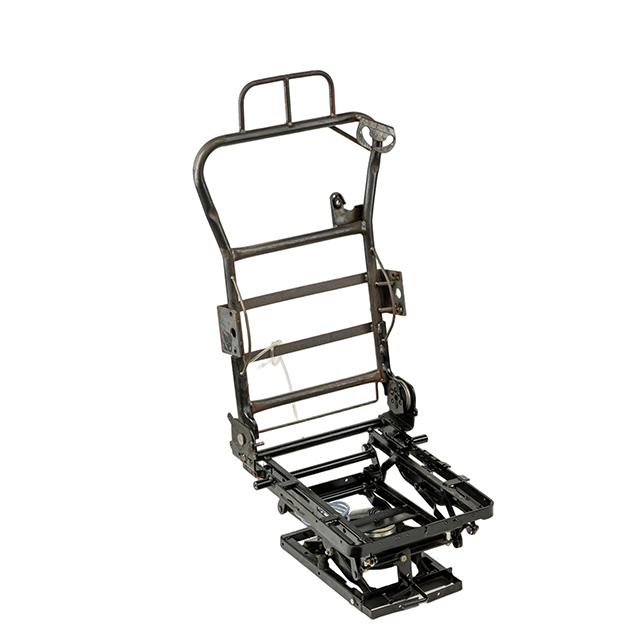
FMVSS 207 Requirements: Seat Anchorage Strength Standards
FMVSS 207 establishes specific force requirements that vary based on seat configuration and vehicle type. For most commercial bus seat frames, the standard mandates that each occupant seat must withstand a forward force equal to 20 times the seat mass in kilograms, multiplied by 9.8 meters per second squared. This calculation ensures that seat anchorages can handle the deceleration forces experienced during frontal collisions.
The standard also requires a rearward force producing a 373 newton-meter moment about the seating reference point for each designated seating position. This rearward loading test evaluates the seat back's ability to restrain occupants during rear-end collisions. The seat must remain in its adjusted position throughout testing, with exceptions only for nonlocking suspension-type seats found in some trucks and buses that allow vertical movement.
Force Application and Pass/Fail Criteria
During compliance testing, loads are applied at specified angles and rates. The forward anchorage test requires reaching the specified load within 5 to 30 seconds and maintaining it for at least 1 second. The seat assembly must demonstrate that no attachment point separates from the vehicle structure, and the seat must not exhibit excessive deformation that would compromise occupant protection. These requirements ensure that the heavy duty seat frame construction maintains structural integrity under extreme loading conditions.
| Standard | Primary Focus | Key Requirement | Application |
|---|---|---|---|
| FMVSS 207 | Seat anchorage strength | 20 × seat mass × 9.8 m/s² forward force | All buses (with specific exclusions) |
| FMVSS 210 | Seat belt anchorage | 22,241 N (5,000 lbs) for Type 1/2 belts | Buses with integrated seat belt anchorages |
| FMVSS 222 | School bus passenger protection | 3,114W N forward force (W = seating positions) | School buses only |
FMVSS 210: Seat Belt Anchorage Integration Requirements
FMVSS 210 addresses a critical safety component that directly interfaces with the bus seat frame: seat belt anchorages. This standard establishes requirements for the proper location and strength of seat belt attachment points to ensure effective occupant restraint. When seat belt anchorages are integrated into the seat structure itself—a common design in commercial buses—the seat frame must withstand both the FMVSS 207 inertial loads and the FMVSS 210 belt anchorage loads simultaneously.
For vehicles manufactured after September 17, 2024, FMVSS 210 requires anchorages for Type 1 (lap belt) and Type 2 (lap/shoulder belt) assemblies to withstand a force of 22,241 newtons (5,000 pounds). This force must be applied through either a Force Application Device (FAD) or body blocks positioned according to specified zones. The testing methodology simulates the loads that would be transferred through the seat belt to the anchorage points during a crash, ensuring that the seat metal chassis can support these life-saving restraint systems.
Special Requirements for School Buses
School buses manufactured after October 21, 2011, face unique requirements under FMVSS 210. Seat belt anchorages for passenger seats must be attached directly to the school bus seat structure, including seats with wheelchair positions or side emergency doors behind them. For school buses with a Gross Vehicle Weight Rating (GVWR) greater than 10,000 pounds equipped with Type 2 seat belts, anchorages must meet the full strength requirements while also satisfying specific height and positioning criteria relative to the seating reference point.
FMVSS 222: School Bus Compartmentalization and Seat Performance
FMVSS 222, "School Bus Passenger Seating and Crash Protection," represents one of the most comprehensive safety standards affecting bus seat frames in the United States. This regulation applies specifically to school buses and employs a concept called "compartmentalization" to protect passengers. Compartmentalization creates a protected space around each occupant using closely spaced, high-backed, well-padded seats that can absorb impact energy while containing and cushioning passengers during collisions.
The standard distinguishes between large school buses (GVWR greater than 10,000 pounds) and small school buses (GVWR of 10,000 pounds or less), with different requirements for each category. Large school buses rely primarily on compartmentalization for passenger protection, while small school buses must have seat belts at all passenger seating positions due to their different crash dynamics. Regardless of size category, the seat frame must demonstrate exceptional structural performance under standardized loading conditions.
Forward and Rearward Loading Performance Criteria
FMVSS 222 specifies detailed performance requirements for school bus passenger seats under both forward and rearward loading. When subjected to forward loading, the seat back must withstand a force of 3,114W newtons (700W pounds), where W represents the number of seating positions the seat provides. This force is applied through a loading bar positioned 406 mm (16 inches) above the seating reference point. The seat back deflection must not exceed 356 mm, and no part of the seat may move within 102 mm of another seat in its originally installed position.
The rearward loading test evaluates how well the stamped and welded seat assembly performs when impacted from behind. The seat must withstand forces while limiting deflection to 254 mm and maintaining all attachment points intact. These requirements ensure that even in secondary collisions or during multiple-impact scenarios, the seat structure continues to protect occupants by maintaining the integrity of the compartmentalized space.
| Bus Type | GVWR | Seat Belt Requirement | Primary Protection Method |
|---|---|---|---|
| Small School Bus | ≤ 10,000 lbs | Type 2 required at all positions | Seat belts + compartmentalization |
| Large School Bus | > 10,000 lbs | Type 1 or 2 (if voluntarily installed) | Compartmentalization |
| Commercial Transit Bus | Varies | FMVSS 207/210 if applicable | Structural integrity standards |
Material and Design Requirements for Compliance
Meeting federal safety standards requires careful attention to material selection and engineering design for bus seat frames. High-strength steel remains the material of choice for most commercial applications due to its excellent strength-to-weight ratio, durability, and predictable performance characteristics. The steel used in seat frame construction must possess sufficient tensile strength and yield strength to withstand the forces specified in FMVSS testing without permanent deformation or structural failure.
The manufacturing process significantly impacts compliance capability. Advanced techniques such as robotic welding ensure consistent weld quality and joint strength throughout the seat structure. Stamped components must maintain precise dimensional tolerances, while welded joints require full penetration and proper heat treatment to achieve specified strength characteristics. Surface treatments, including electrocoating and powder coating, protect the steel from corrosion while adding minimal weight to the overall assembly.
Engineering Considerations for Seat Frame Design
Designing a compliant driver seat frame or passenger seat requires balancing multiple engineering constraints. The frame must be strong enough to pass all applicable FMVSS tests while remaining light enough to minimize vehicle weight and maximize fuel efficiency. Attachment point locations must allow for proper load distribution, and the overall geometry must accommodate required seat belt anchorage positions while maintaining passenger comfort and accessibility.
Computer-aided engineering (CAE) tools, including Finite Element Analysis (FEA), play a crucial role in modern seat frame development. Engineers use these tools to simulate crash scenarios and optimize structural designs before physical prototypes are built. This approach reduces development time and costs while ensuring that the final product meets or exceeds all regulatory requirements. The design must also account for fatigue life, as commercial bus seats experience millions of loading cycles throughout their service life.
Looking for Compliant Bus Seat Frame Solutions?
SANBO specializes in manufacturing high-quality, safety-certified bus seat frames that meet all US federal standards. Our heavy-duty seat metal chassis undergoes rigorous testing to ensure full compliance with FMVSS 207, 210, and 222 requirements.
Request a Quote NowTesting Procedures and Certification Process
Manufacturers must follow strict testing protocols to demonstrate compliance with federal safety standards. The testing process typically begins with self-certification, where manufacturers conduct tests according to NHTSA's published test procedures and certify that their products meet all applicable requirements. These tests must be performed by qualified personnel using calibrated equipment in controlled laboratory environments that meet NHTSA specifications.
For FMVSS 207 testing, the bus seat frame is mounted to a test fixture that simulates the vehicle floor structure. Loads are applied through actuators positioned to replicate forces acting on the seat's center of gravity during a crash. Data acquisition systems record force, displacement, and time measurements throughout the test. The seat must demonstrate that it meets all performance criteria, including load magnitudes, duration requirements, and failure mode restrictions.
Documentation and Compliance Verification
Comprehensive documentation is essential for demonstrating regulatory compliance. Manufacturers must maintain test reports, material certifications, design drawings, and quality control records. When NHTSA conducts compliance testing or investigates potential safety defects, these documents provide evidence that the product was designed, manufactured, and tested according to federal requirements. Third-party testing laboratories can provide additional verification and may be required for certain applications or markets.
Common Compliance Challenges and Solutions
Manufacturers frequently encounter specific challenges when developing bus seat frames that meet all applicable standards. One common issue involves balancing the conflicting demands of FMVSS 207 seat anchorage requirements and FMVSS 210 belt anchorage requirements when these loads must be applied simultaneously. The combined loading can create stress concentrations that require careful structural reinforcement without excessive weight gain.
Another challenge arises from the need to accommodate different seat configurations and adjustability features while maintaining compliance. Seats with multiple adjustment positions must meet all requirements in each position, which can complicate the design process. Additionally, manufacturers must ensure that replacement or aftermarket seats maintain the same level of safety performance as original equipment, which requires rigorous testing and quality control procedures.
Quality Control and Production Consistency
Maintaining compliance across production volumes requires robust quality control systems. Even minor variations in material properties, welding parameters, or assembly procedures can affect the seat frame's ability to meet federal standards. Manufacturers implement statistical process control, regular destructive testing of production samples, and comprehensive inspection procedures to ensure every seat metal chassis leaving the factory meets the same high standards as the originally certified design.
Recent Updates and Future Regulatory Trends
The regulatory landscape for commercial vehicle safety continues to evolve. In September 2024, NHTSA published a final rule updating FMVSS 210 to incorporate new testing methodologies, including the Force Application Device (FAD) as an alternative to traditional body blocks. This change, which becomes fully effective in September 2027, aims to improve testing consistency and better represent real-world crash scenarios. Manufacturers must prepare for this transition by updating their testing facilities and procedures.
NHTSA has also issued an Advanced Notice of Proposed Rulemaking (ANPRM) to update FMVSS 207, focusing on improved seat back performance in rear-impact collisions. While specific requirements have not been finalized, the agency's research suggests future standards may include enhanced seat back strength requirements and improved integration with head restraint systems. Manufacturers should monitor these developments closely and consider incorporating anticipated requirements into new designs to future-proof their products.
Why Compliance Matters: Safety and Liability Considerations
Compliance with federal safety standards is not merely a regulatory checkbox—it represents a fundamental commitment to passenger safety and legal responsibility. When a bus seat frame fails during an accident, the consequences can be catastrophic, resulting in serious injuries or fatalities. Beyond the human cost, non-compliance can expose manufacturers, bus companies, and operators to substantial legal liability, including product liability lawsuits, regulatory penalties, and potential criminal charges in cases of willful violations.
The National Highway Traffic Safety Administration has the authority to investigate potential safety defects and order recalls of non-compliant vehicles. Recalls can cost manufacturers millions of dollars in direct expenses while damaging brand reputation and customer trust. Furthermore, victims of accidents involving non-compliant seats may pursue civil litigation, seeking compensation for injuries, lost wages, and pain and suffering. Insurance companies may deny coverage or seek subrogation against parties responsible for safety violations.
Conclusion: Partnering with Experienced Manufacturers
Navigating the complex regulatory requirements for commercial bus seat frames requires specialized expertise, advanced manufacturing capabilities, and an unwavering commitment to safety. The interplay between FMVSS 207, 210, and 222 creates a demanding set of performance criteria that only properly engineered and tested products can meet. From material selection and design optimization to testing and documentation, every aspect of seat frame development must align with federal requirements.
For bus manufacturers and fleet operators seeking reliable, compliant seat frame solutions, partnering with an experienced supplier makes the difference between meeting regulatory minimums and achieving excellence in passenger safety. SANBO brings decades of manufacturing expertise and a proven track record of delivering heavy duty seat frames that exceed industry standards. The company's commitment to quality, combined with comprehensive testing and certification capabilities, ensures that every product provides the structural integrity and crash performance that federal regulations demand.
Understanding safety standards is the first step toward compliance—implementing them requires the right manufacturing partner. When passenger safety is on the line, choosing a supplier with demonstrated expertise in regulatory compliance and proven product performance is not just good business—it's an ethical imperative.
Frequently Asked Questions
What is the main difference between FMVSS 207 and FMVSS 210?
FMVSS 207 addresses seat anchorage strength and the seat's attachment to the vehicle floor, while FMVSS 210 specifically governs seat belt anchorage strength and location. When seat belts are integrated into the seat structure, both standards must be met simultaneously.
Do all commercial buses need to meet FMVSS 222 requirements?
No, FMVSS 222 applies specifically to school buses. Transit buses, motorcoaches, and other commercial buses must meet FMVSS 207 and 210 requirements but are not subject to FMVSS 222's compartmentalization standards.
How often must bus seat frames be recertified or retested?
Manufacturers self-certify compliance at the time of production. Ongoing retesting is not required unless design changes are made or NHTSA initiates a compliance investigation. However, quality control testing of production samples is recommended.
Can aftermarket seat frames be installed in commercial buses?
Yes, but aftermarket seats must meet the same FMVSS standards as original equipment. Installation must not compromise vehicle safety systems, and proper documentation of compliance should be maintained.
What happens if a bus seat frame fails compliance testing?
Failure requires design modifications and retesting before the product can be sold. If already in production, NHTSA may order a recall. Manufacturers must identify the failure mode, implement corrective actions, and verify compliance through additional testing.
Are imported bus seat frames subject to the same standards as domestic products?
Yes, all bus seat frames sold or installed in US commercial vehicles must meet federal safety standards regardless of country of origin. Importers are responsible for ensuring compliance and maintaining proper documentation.
References and Resources
For authoritative information on federal motor vehicle safety standards, visit the following official resources:
Need Expert Guidance on Bus Seat Frame Compliance?
SANBO's engineering team has extensive experience helping manufacturers and operators navigate federal safety requirements. From initial design consultation to final certification, we provide comprehensive support for your commercial vehicle seating projects.
Contact Our Technical Team