





What is a Car Seat Angle Adjuster? A Complete Guide to Automotive Recliner Mechanisms
Understanding the mechanics behind automotive comfort starts with one critical component: the car seat angle adjuster. This precision-engineered mechanism serves as the backbone of seat recline functionality, allowing drivers and passengers to customize their seating position for optimal comfort and safety. Whether commuting to work or embarking on a cross-country road trip, the car seat angle adjuster silently performs thousands of adjustments throughout a vehicle's lifetime.
Key Takeaways
A car seat angle adjuster is a mechanical device that controls the backrest recline angle, typically using gear-based locking mechanisms
Modern adjusters must withstand significant torque loads while providing smooth, reliable operation over the vehicle's lifespan
Three main types exist: round disc adjusters, sector gear adjusters, and high-angle adjusters for specialized applications
Safety standards require these components to maintain structural integrity during crashes while supporting everyday comfort needs
Quality manufacturing processes including heat treatment and precision stamping are essential for long-term reliability
Understanding the Car Seat Angle Adjuster
The car seat angle adjuster, often called a seat recliner or seat recliner mechanism, represents a sophisticated balance between mechanical strength and user-friendly operation. At its core, this device connects the seat back to the seat base, creating a controlled pivot point that allows angular adjustment while maintaining safety and stability.
When a driver pulls the recliner lever or handle, the adjuster disengages its locking mechanism—typically a metal pawl that meshes with gear teeth on a sector plate. This temporary release allows the seat back to rotate smoothly. Upon releasing the control, spring-loaded components immediately re-engage, locking the backrest securely in the newly selected position. This entire process happens in milliseconds, demonstrating the precision engineering involved in these mechanisms.
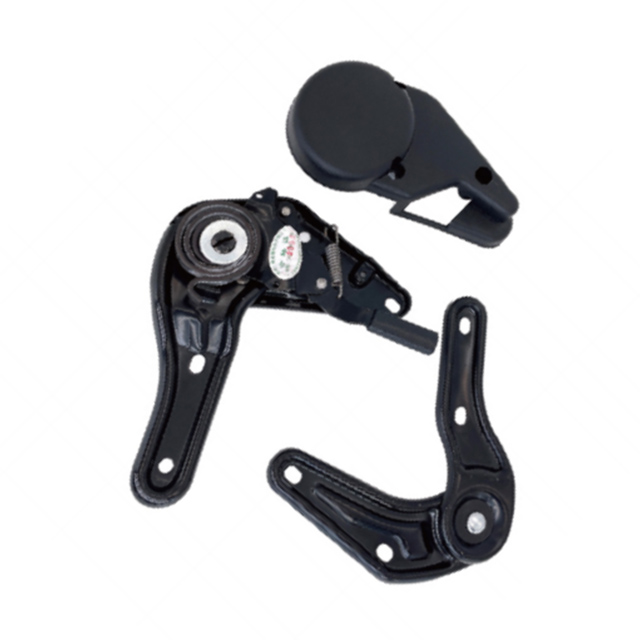
The Core Components
Modern car seat angle adjusters consist of several precisely manufactured parts working in harmony. The gear plate, typically produced through fine blanking or precision stamping, features carefully designed teeth that provide multiple locking positions. These plates undergo heat treatment to achieve the necessary hardness and wear resistance, ensuring they can handle repeated cycles without degradation.
The locking pawl, another critical element, must engage and disengage thousands of times throughout the seat's service life. Manufacturers use high-quality steel alloys and surface treatments to minimize wear and maintain consistent performance. Return springs provide the force needed to quickly re-engage the locking mechanism, while bushings and bearings reduce friction during rotation.
Types of Car Seat Angle Adjusters
The automotive industry employs different adjuster designs based on application requirements, vehicle type, and performance specifications. Understanding these variations helps in selecting the appropriate mechanism for specific needs.
Round Disc Adjusters
Round disc adjusters feature a circular gear plate design commonly found in passenger vehicles and light trucks. These adjusters offer adjustment ranges typically between 30 to 180 degrees, providing versatility for various seating preferences. The circular configuration distributes load forces evenly across the mechanism, contributing to durability and smooth operation. Their compact design makes them ideal for modern vehicles where space optimization is crucial.
Sector Gear Adjusters
Sector gear adjusters utilize a segmented gear design rather than a complete circular plate. This configuration is prevalent in heavy-duty applications such as trucks, construction equipment, and commercial vehicles. The sector design allows for reinforced construction in the load-bearing areas while reducing overall weight. These adjusters excel in environments requiring exceptional torque capacity and vibration resistance.
High-Angle Adjusters
High-angle adjusters represent specialized mechanisms designed for applications requiring extended recline ranges approaching 180 degrees. Gaming chairs, premium office seating, and recreational vehicles commonly incorporate these adjusters. They enable users to transition seamlessly from upright working positions to nearly flat resting configurations, demonstrating the versatility of modern car seat angle adjuster technology adapted for broader applications.
| Specification | Standard Automotive | Heavy-Duty | High-Angle |
|---|---|---|---|
| Adjustment Range | 35-180° | 30-155° | 0-180° |
| Typical Torque Capacity | 500-800 Nm | 800-1200 Nm | 400-600 Nm |
| Primary Applications | Passenger cars, SUVs | Trucks, construction vehicles | Gaming chairs, RVs |
| Weight Range | 0.8-1.5 kg per unit | 1.5-2.5 kg per unit | 0.6-1.2 kg per unit |
| Cycle Life (adjustments) | 30,000-50,000 | 50,000-80,000 | 20,000-40,000 |
How Car Seat Angle Adjusters Work
The operation of a car seat angle adjuster relies on fundamental mechanical principles combined with precision manufacturing. When an occupant activates the release mechanism—whether through a lever, cable, or electric motor—a series of coordinated actions occur within the adjuster assembly.
The control input first overcomes the spring force holding the locking pawl in engagement with the gear plate teeth. As the pawl retracts, it creates clearance for the gear plate to rotate freely. The seat back can then pivot around the adjuster axis under the occupant's control or through powered actuation in electric seats. Throughout this rotation, the mechanism must maintain structural integrity and provide smooth, controlled movement without binding or excessive play.
When the occupant releases the control, the return spring immediately drives the locking pawl back toward the gear plate. The pawl's design allows it to cam over gear teeth until reaching the next available locking position, where it drops into full engagement. This self-locking feature ensures the seat back cannot unexpectedly recline, providing both safety and peace of mind during normal use and emergency situations.
Safety Standards and Regulatory Requirements
Car seat angle adjusters must meet stringent safety standards that vary by region and vehicle type. In the United States, the Federal Motor Vehicle Safety Standard (FMVSS) No. 207 establishes minimum requirements for seating systems, including recliner mechanisms. According to federal safety regulations, seat backs must withstand specific rearward moments to ensure occupant protection during rear-impact collisions.
European markets follow ECE R17 standards, which specify requirements for seat strength, anchorages, and head restraints. These regulations mandate that car seat angle adjusters maintain their locking function under crash loads, preventing dangerous seat back collapse that could lead to occupant injury. Manufacturers conduct extensive testing to verify compliance, including static load tests, dynamic crash simulations, and durability cycling.
The torque capacity of modern adjusters typically far exceeds minimum regulatory requirements. Where regulations might specify 373 Newton-meters (Nm) as a baseline, production adjusters commonly achieve 500-1200 Nm depending on the application. This engineering margin ensures reliability across diverse real-world conditions including varying occupant weights, crash scenarios, and long-term wear.
Manufacturing Excellence in Car Seat Angle Adjusters
The production of high-quality car seat angle adjusters demands sophisticated manufacturing capabilities and rigorous quality control. The process begins with material selection, where manufacturers choose steel alloys specifically formulated for strength, fatigue resistance, and formability. Premium adjusters utilize medium-carbon or low-alloy steels that provide optimal properties after heat treatment.
Precision Stamping and Forming
Gear plates and structural components undergo precision stamping processes that achieve tight dimensional tolerances. Fine blanking, a specialized technique, produces gear teeth with smooth surfaces and precise profiles without the need for secondary machining. This process reduces manufacturing costs while ensuring consistent quality across high-volume production runs.
Heat Treatment for Enhanced Performance
Critical components, particularly gear plates and locking pawls, undergo controlled heat treatment processes. Carburizing or induction hardening creates a wear-resistant surface layer while maintaining a tough, ductile core. This combination provides the wear resistance needed for long service life while retaining the strength to handle impact loads during crashes. Heat treatment parameters are carefully controlled and validated to ensure consistent metallurgical properties.
Assembly and Testing
Final assembly brings together precisely manufactured components into functional units. Automated assembly lines ensure consistent torque application for fasteners, proper lubrication of moving parts, and correct positioning of springs and pawls. Each completed car seat angle adjuster undergoes functional testing to verify smooth operation, proper locking engagement, and absence of defects before packaging and shipment.
Need Reliable Car Seat Angle Adjusters?
When it comes to sourcing high-quality seat recliner mechanisms that meet rigorous safety standards and deliver lasting performance, choosing the right supplier makes all the difference. SANBO specializes in precision-engineered seat adjusters for automotive, commercial vehicle, and specialty seating applications.
Our advanced manufacturing capabilities include precision stamping, heat treatment, and comprehensive quality testing to ensure every component meets or exceeds international standards. With decades of experience in metal fabrication and seat mechanism production, SANBO delivers the reliability and performance your products demand.
Request a Quote TodayCommon Issues and Maintenance
While car seat angle adjusters are designed for longevity, understanding common issues helps users recognize when service or replacement becomes necessary. The most frequent problem involves difficulty adjusting the seat position, often caused by internal wear or lack of lubrication. Over time, repeated cycling can wear gear teeth or reduce the effectiveness of lubricants, leading to increased friction and resistance during operation.
Another concern involves incomplete locking, where the seat back feels loose or can be moved slightly even when the release lever is not engaged. This condition typically indicates worn pawl engagement surfaces or weakened return springs. Such issues compromise both comfort and safety, requiring prompt attention from qualified technicians.
Preventive maintenance for car seat angle adjusters remains minimal due to their sealed, self-contained design. Users should avoid forcing adjustments if resistance is encountered and should never attempt to override the locking mechanism. Periodic inspection during routine vehicle maintenance can identify developing issues before they become safety concerns. Professional assessment is recommended if unusual noises, excessive play, or adjustment difficulties occur.
Innovation and Future Developments
The evolution of car seat angle adjusters continues as automotive technology advances. Electric actuation systems are becoming increasingly prevalent, replacing manual lever controls with push-button convenience and enabling memory functions that automatically adjust seat position for different drivers. These systems integrate the traditional mechanical adjuster with electric motors and position sensors, maintaining the proven reliability of gear-based locking while adding modern convenience features.
Smart seat systems represent the next frontier, incorporating sensors that monitor occupant posture and adjust seat parameters automatically. Advanced materials and manufacturing techniques enable lighter components without sacrificing strength, contributing to overall vehicle weight reduction and improved fuel efficiency. Some manufacturers are exploring variable-stiffness mechanisms that can adapt their resistance characteristics based on driving conditions or occupant preferences.
Safety innovations continue to drive development as well. Researchers are investigating active safety features that could pre-position seats or adjust locking force in anticipation of collisions, based on inputs from vehicle safety systems. These developments build upon the fundamental car seat angle adjuster design while leveraging electronic controls and predictive algorithms to enhance occupant protection.
Summary
The car seat angle adjuster stands as a testament to precision engineering in automotive design, combining mechanical simplicity with robust performance. These mechanisms enable the fundamental comfort and safety features that modern vehicle occupants expect, while meeting rigorous regulatory standards for crash protection. From passenger cars to heavy equipment, the principles remain consistent: provide reliable, smooth adjustment while maintaining structural integrity under all conditions.
Understanding the types, operation, and manufacturing processes behind car seat angle adjusters helps stakeholders make informed decisions about component selection and quality requirements. Whether designing new seating systems, sourcing replacement parts, or simply appreciating the engineering in everyday objects, recognizing the sophistication within these mechanisms enhances our understanding of automotive technology. As the industry continues to evolve, the car seat angle adjuster will undoubtedly adapt, incorporating new materials, manufacturing techniques, and smart technologies while maintaining its essential function: allowing safe, comfortable seat positioning for every journey.
Frequently Asked Questions
What is a car seat angle adjuster?
A car seat angle adjuster is a mechanical mechanism that controls the recline angle of a vehicle seat's backrest. It uses a gear-based locking system to allow adjustment between various positions while maintaining secure locking during normal use and crash events.
How does a car seat angle adjuster work?
The adjuster operates through a locking pawl that engages with gear teeth on a sector plate. When the release lever is pulled, the pawl retracts, allowing the seat back to rotate. Releasing the lever causes a spring to re-engage the pawl into the nearest locking position, securing the seat back at the desired angle.
What are the main types of seat angle adjusters?
The three primary types are round disc adjusters (common in passenger vehicles), sector gear adjusters (used in heavy-duty applications), and high-angle adjusters (designed for gaming chairs and RVs with extended recline ranges up to 180 degrees).
Why is my car seat adjuster hard to operate?
Difficulty operating the adjuster typically results from worn internal components, insufficient lubrication, or debris accumulation. In some cases, the return spring may weaken over time, or gear teeth may show wear from repeated use. Professional inspection is recommended for persistent issues.
How much torque can a car seat angle adjuster handle?
Modern automotive seat adjusters typically handle 500-800 Nm for standard applications, while heavy-duty units designed for trucks and construction equipment can withstand 800-1200 Nm. These values significantly exceed minimum regulatory requirements to ensure safety margins.
Are car seat angle adjusters universal or vehicle-specific?
Car seat angle adjusters are application-specific rather than universal. They vary in size, mounting configuration, torque capacity, and adjustment range based on the vehicle type and seat design. Proper replacement requires matching the exact specifications of the original equipment.
What safety standards apply to seat adjusters?
In the United States, FMVSS No. 207 governs seating systems including recliner mechanisms. European markets follow ECE R17 standards. Both require seat backs to withstand specified loads during crash events while maintaining locking function to protect occupants.
How long do car seat angle adjusters last?
Quality adjusters are designed for 30,000-80,000 adjustment cycles depending on the application, which typically exceeds the vehicle's service life under normal use. Heavy-duty applications may experience shorter service intervals due to more frequent adjustments and higher loads.